Discovering

“Writing a poem is discovering.” This from possibly one of the world’s greatest poets, Robert Frost, but to me, it best describes poetry. For me, writing a poem is discovering I’m not a poet. All my attempts sound like limericks, really bad limericks. As does any adolescent girl, I wrote lines and lines of it, mostly about horses or Paul McCartney or Paul McCartney and horses. The same English teacher who encouraged and guided my prose was quite candid about my poetry–stick to reading it.

Sad to say I’m no poet, seeing as I’m half Irish. Ireland–where bards were held in the highest esteem. Wandering bards were always given a place to stay, the best food, the best bed, and, occasionally, the lady of the house. All they had to do was take out their harps and recite their poems, great and fanciful tales of Irish kings and warriors. It’s a wonderful heritage.

“The minstrel boy to the war has gone,
“In the ranks of death you will find him.
“His father’s sword he has girded on,
“And his wild harp slung behind him;
“Land of Song! said the warrior bard,
“Tho’ all the world betrays thee.
“One sword, at least, thy rights shall guard,
“One faithful harp shall praise thee.”
(From “The Minstrel Boy,” by Thomas Moore)


Though I was no poet in high school (still aren’t), I loved memorizing poetry and reciting poems like a bard. Poe, Longfellow, Byron, Burns, Browning, and later, as an adult, Eliot, Heaney, Angelou, ah me, what wonderful words. I think the Irish part of me liked hearing poetry as opposed to reading it. I can read poetry now and have to re-read it several times to “get” it. But, if I hear it or read it aloud, it opens to me instantly.

I consider Poe to be like a utility player in baseball–he wrote prose, he wrote poetry, he founded a couple of literary genres–but his poetry was lyric and visual and emotional. And that, to me, is what good poetry does–you feel, you experience, as if you were in the poem.

“But our love it was stronger by far than the love
“Of those who were older than we-
“Of many far wiser than we-
“And neither the angels in heaven above,
“Nor the demons down under the sea,
“Can ever dissever my soul from the soul
“Of the beautiful Annabel Lee.”

(From “Annabel Lee,” by Edgar Allan Poe

Presidential inaugurations have served to be an opportunity for millions to appreciate the country’s greatest poets. I remember the pictures of a young and vital John F. Kennedy shielding the eyes of Robert Frost from the sun as he read. Frost had composed a poem for the event, but his aging eyes and the poem’s length made him change his mind. Instead, he recited the brief “The Gift Outright.”

“The land was ours before we were the land’s.
“She was our land more than a hundred years
“Before we were her people. She was ours
“In Massachusetts, in Virginia,
“But we were England’s, Still colonials,
“Possessing what we still were unpossessed by,
“Possessed by what we now no more possessed.
“Something we were withholding from our land of living,
“And forthwith found salvation in surrender.
“Such as we were we gave ourselves outright
“(The deed of gift was many deeds of war)
“To the land vaguely; realizing westward,
“But still unstoried, artless, unenhanced,
“Such as she was, such as she would become.”

And in 1993, the magnificent Maya Angelou spoke to all of us but especially to those of us who believed in Clinton’s “Don’t Stop Thinking About Tomorrow” campaign theme.

“Do not be wedded forever
“To fear, yoked eternally
“To brutishness.
“The horizon leans forward,
“Offering you space to place new steps of change.
“Here, on the pulse of this fine day
“You may have the courage
“To look up and out and upon me, the Rock, the River, the Tree, your country.
“No less to Midas than the mendicant.
“No less to you now than the mastodon then.
“Here, on the pulse of this new day
“You may have the grace to look up and out
“And into your sister’s eyes, into Your brother’s face, your country
“And say simply
“Very simply
“With hope Good morning.

(From “On the Pulse of Morning,” by Maya Angelou)

Today, you can take any song, remove the music, and you have poetry.Read Dylan (Bob, that is.). Read Cobain. Rap emerged from an African-American tradition of exchanging rhyming insults called “doing the dozens.” Put aside any prejudice you may have about Eminem and watch the movie “8 Mile.” There’s a wonderful scene where the mostly black workers at a metal stamping plant are outside on their lunch break. Two of them start back-and-forth rhymes about the quality of the food from the food truck, which then evolve into statements about the lack of opportunity and equality in 1990’s Detroit.

Haiku with its Zen-ness can summarize in those three short lines thousands of thoughts and ideas. Writing haiku is an amazing talent, and I love how visual they are. So to prove I’m no poet, here’s something I wrote when I was having prose writer’s block.

Laboring
Blocked writer moaning.
Ideas breech in the brain.
Where is the midwife?

Seamus Heaney came to me in my 40’s, and I wondered, “Oh, you incredible man, where were you all my life?” He took The Troubles on first-hand and sacrificed his popularity in parts of Ireland and England, but his words resonated. He wrote poetry about prehistoric times and modern times, did an amazing translation of Beowulf, and won the Nobel for Literature. Of him, the NY Times Book Review said, “Anyone who reads poetry has reason to rejoice at living in the age when Seamus Heaney is writing.” His poem, “Digging,” about watching his father work at hoeing the garden and reflecting on his own work of writing is something I think about every day:

“Between my finger and my thumb
“The squat pen rests.
“I’ll dig with it.”

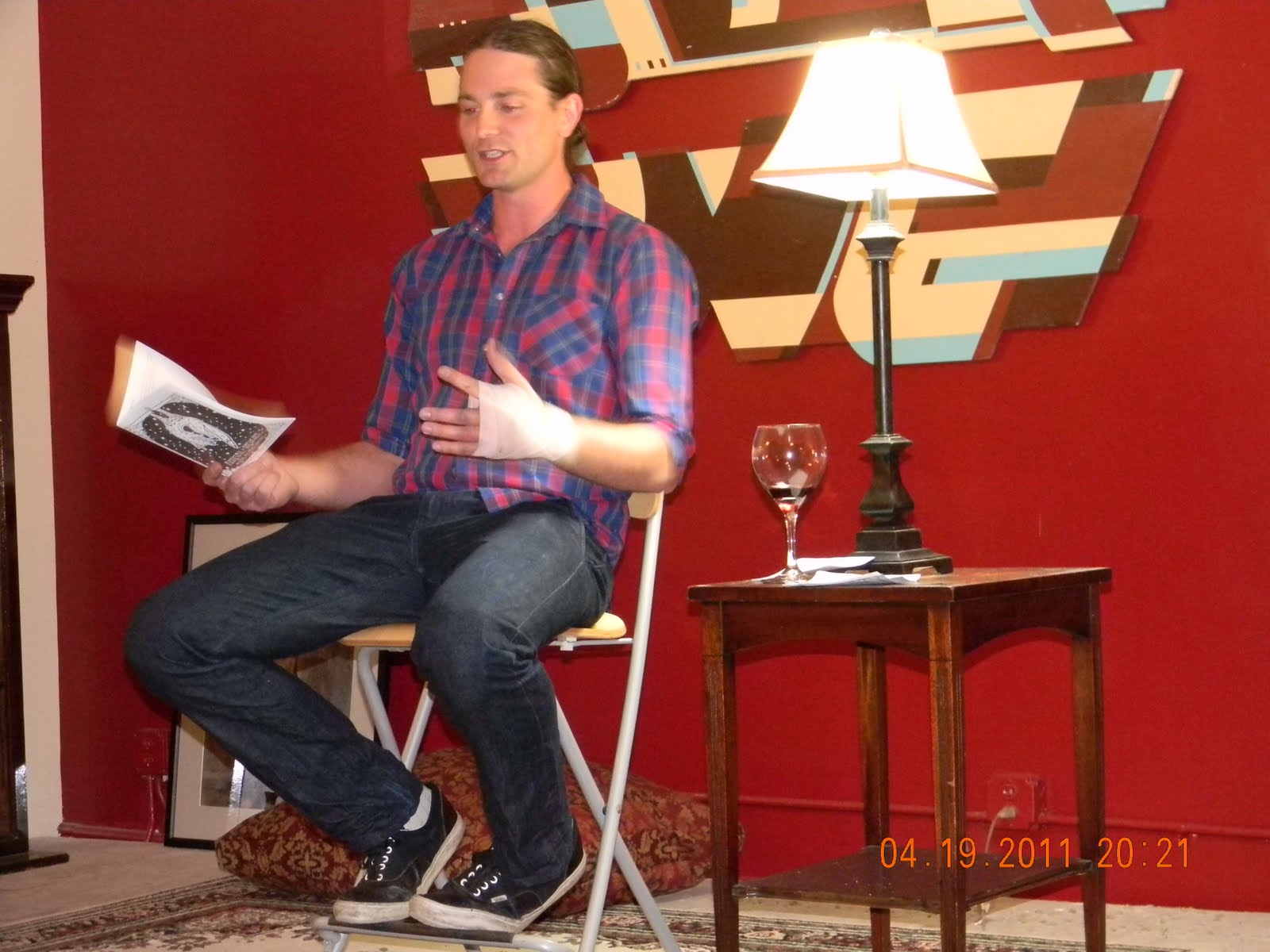
(If you’re in Staunton, VA, on April 20, join those of us in SWAG–Staunton, Waynesboro, Augusta Group of Writers–for our Poetry Fest in celebration of National Poetry Month. At the Darjeeling Cafe, 7 p.m.)

And Yet Another New Name

I wrote earlier in the year about wanting my blog to be taken more seriously, so I dispensed with the catchy, alliterative name, “Maggie’s Musings.” I thought about using “Rarely Well Behaved,” after the title of my book but decided that would be too confusing. Besides, I’d discovered by then people had misquoted Laurel Thatcher Ulrich. The correct quote is “Well behaved women seldom make history.” So, the blog became “Seldom Well Behaved.”

Yeah. Positively exciting. Look, it was the best I could come up with at the time, but I’m not a fan of it. In the three months since I changed the blog’s name to Seldom Well Behaved, I haven’t really come up with an alternative.

I like to change things around–I’ve never had the fear of change that can paralyze the accomplishment of anything from a new blog title to repealing Don’t Ask, Don’t Tell. My ex would come home after a trip and often find furniture moved around. One time I swapped the living room and the dining room, and even now in a brand new house, every few weeks I make some sort of little change–rearranging photos, moving lamps among the tables. The women out there understand; it’s not something we can articulate. It’s just something we do.

That being said, why is re-naming a blog so difficult? I’ll admit titles have never come easy to me. Many times I’ve written a story, given it to someone to read, and asked him or her what I should name it. However, titling a work has become easier over the years. I’ve reached the point where the story or the novel “tells” me its name. Now, if the blog would just cooperate, I wouldn’t be wasting a post whining about it.

So, let’s wind this up. A couple of weeks ago I ordered an iPad2, and because I did so on-line (rather than stand in line at a store) I got free engraving. My first iPod, a Nano, is engraved with “Deed not Creed,” a reflection of my commitment to Ethical Culture and trying to live an ethical life. What to engrave on the iPad2 came to me easily and also from an earlier post when this blog was called Maggie’s Musings. When I wrote about the six-word memoirs project I concluded the post with my six-word memoir, “I never took the expected path.” That sums up my life so succinctly that it even surprised me with its brevity and appropriateness–whatever others expected of me, I did just the opposite. If my parents were still here, they would be nodding their heads vigorously in agreement. It’s not a bad thing; it’s just me.

Welcome, then, to Maggie’s Musings, aka Seldom Well Behaved, and finally, Unexpected Paths.

My Day Two–VA Festival of the Book

There are few things that will get me out of bed before 0700 on a Saturday morning, but a book fair will do it. My Day Two at the Virginia Festival of the Book was going to start at the Book Fair at 0900. I hit the road a little before 0800, stopped to get my favorite road breakfast from Starbucks, and then I was on my way to C’ville.

The atrium of the Omni Hotel was a sea of books and authors. Cliche, I know, but it was. What was very heartening to see were the number of African-American authors showcasing their work. Virginia hasn’t quite “gotten there” yet, but we have come a long way. I decided to stop by the James River Writers table. That’s the organization sponsoring the contest one of my novels is in. I just wanted to say thanks for the encouraging e-mail I got from JRW–yes, I’m sure all the finalists got an encouraging e-mail, but it was especially encouraging to me. I introduced myself, and the person there blurted, “Oh, your book is in the contest! Congratulations! We’re so excited you stopped by!” Yes, I’m sure they said that to every finalist who stopped by, but it was nice they remembered me. They were so boisterous, in fact, people stopped and took notice, and the JRW folks pointed to me and said, “She’s one of our novelists!” Nothing like a little ego boost to start the day!

Both panels I picked that day were moderated by a writer friend of mine, also from Staunton, Cliff Garstang. (Cliff’s award-winning book of linked short stories is In an Uncharted Country.) Cliff is a voracious reader and lover of the written word, and he brought his enthusiasm for his art to both panels. The first, Death: Another Time, Another Place, focused on murder mysteries and featured John Connolly (Nocturnes, Bad Men), Alan Orloff (Diamonds for the Dead), Deanna Raybourn (Dark Road to Darjeeling), and Paul Robertson (Dark in the City of Light).

Connolly, being an Irishman with the gift of gab (aren’t we all?), was a great opening “act” for the panel, and he discussed how an Irishman writing about Ireland had been done before. So he came to America to be an Irishman writing about Maine. I had read one of his books some years back, so I picked up Nocturnes, a collection of short stories with a supernatural bent.

Orloff draws on his Jewish background for his featured book and familiar places–to me–in the Washington, DC metro area for his mystery. He has recently started a mystery series featuring a stand-up comedian. He also described his writing process–a substantial outline that he fills in. Quite the engineering approach, but he is an engineer.

Raybourn’s featured book was the latest in her Lady Julia Grey series that take place in Victorian England. A former teacher with degrees in history and English (like me), she picked the Victorian Era she said because she wanted all that proper repression “with the evil peeking out from behind the curtain.” Her humor and characters reminded me of Elizabeth Peters’ Amelia Peabody series, so I decided to try Dark Road to Darjeeling.

Robertson’s book, Dark in the City of Light, is about the Franco-Prussian War, but what I enjoyed about his talk was that he does the same thing I do–take real characters and a true story and weave a mystery about them. Whereas he focuses on the 19th Century, I’m in the 20th, but it’s the same concept. So, I added Dark in the City of Light to my bookshelf.

All the authors were so willing to chat afterwards that I found it rather refreshing. Connolly and I chatted about my Irish grandmother, then Raybourne and I talked about the challenges of teaching when you know you weren’t really cut out for it. The good day just kept on going.

The afternoon panel moderated by Cliff was Historical Fiction. As I’ve said, I guess what I write is historical fiction, just focused more on current events than far in the past. I had a question already framed about the importance of research, but Cliff was way ahead and posed it to the panel. Paul Robertson was a repeat from the morning, joined by Brenda Rickman Vantrease (The Heretic’s Wife), Lenore Hart (The Raven’s Bride), and George Minkoff (The Leaves of Fate.)

Vantrease’s featured book was her third with the concept of freedom of thought and religion. She took a real person associated with Sir Thomas More and made that person’s wife (whose name is lost to history) the protagonist. She also showed More in an accurate light. Many people choose to ignore that he burned  at the stake a lot of people he considered heretics.

Minkoff has spent years working on a trilogy which takes place in England and America around the time of the Jamestown Colony. John Smith, Powhatan, and Pocahontas are key characters, but accurately portrayed. Minkoff has also studied the language of the time and has his characters speak like true Elizabethans. It was obvious the tremendous amount of research he’s conducted to produce this trilogy, but he emphasized the point that you research to put yourself in the time and place, you read book after book for that knowledge, but you don’t just regurgitate what you’ve read. The research gives you the voice.

Hart, named for the Lenore in Poe’s “The Raven,” decided not to ignore that connection she had with Poe, but she didn’t want to write historical fiction with Poe as the main character. “Done to death,” she said. She opted instead to write about Poe from the point of view of his dead wife–the lamented Lenore and Annabel Lee of his poetry. She read from the first chapter of The Raven’s Bride, a scene where Mrs. Poe goes to hospital to see her “Eddie,” and it takes her a few minutes to realize she’s a ghost. I’d already purchased Robertson’s book, so I added Hart’s to my collection.

It was a great two days of books and writers. I love being around writers, especially those who’ve enjoyed initial success. They are so accepting of fans and other aspiring writers, so much so that for next year I can see myself on the other side of the table, maybe signing my book. Yep, I can’t wait ’til the next Virginia Festival of the Book.

Virginia Festival of the Book

Enough of the politics and disaster blogging. Let’s write about someting exciting for a change–like writing.

Since Wednesday, Charlottesville has been hosting the 17th Annual Virginia Festival of the Book. It’s four and a half days of books and writers and panels about writing and publishing. Great stuff. (For a look at the events and history of the Festival, go towww.vabook.org.) The Festival covers all prose genres and poetry, and if you buy tickets in time you can listen to luncheon speakers like Kathy Reichs and Jim Lehrer. Apparently, you needed to buy those tickets last year because by the time I got to the Web site in early February, the events were sold out. I could only live vicariously through people I overheard talking about them in the hallways.

On Friday, I picked two panels to attend: Novels about Novelists and Worlds of Danger.

The Novels About Novelists panel was held at WriterHouse, whose mission is to “promote the creation and appreciation of literature and to encourage the development of writers of all levels by providing affordable, secure workspace and meeting space, high quality writing instruction, and literary events for the public.” (For more info on WriterHouse, go to www.writerhouse.org.)

The three authors and their books were Martha McFee (Dear Money),John McNally (After the Workshop), and Carolyn Parkhurst (The Nobodies Album).

McFee’s book is about a successful novelist who decides she needs to make more money and so decides to give up writing to be a bond trader. McFee herself described it as “an intersection of commerce and art with a focus on commerce over art.” An interesting premise to be sure, but I wasn’t that interested in reading about someone giving up art to become a money-grubbing capitalist. However, McFee read a portion from Dear Money that perfectly showcased society and media in New York City–it was a spot-on caricature of the “ladies who lunch” in present-day Manhattan. McFee explained that her protagonist does feel as if she’s betraying her art, almost as if she’s having an illicit affair. It allowed McFee to explore how it would feel to give up writing but not really do it.

In After the Workshop, McNally wrote about an aspiring writer who graduated from a prestigious writing workshop, only to stay in that city and work as the meeter/greeter who shepherds other writers around the city when they come to teach at the workshop. That much, McNally indicated, was autobiographical; however, with several books published he has no further relation to his protagonist. McNally read a passage describing his protagonist’s encounter with an agent–wildly comic but poignant at the same time. McNally described the writer in his novel as someone who continually questions his talent and everything else about his life. That one was a purchase for me, because I’m always questioning whether I can really do this (writing) or not.

Parkhurst’s topic in The Nobodies Album was the most intriguing–a successful novelist who decides to re-write the endings to all her published works while having a personal crisis with her son. Parkhurst described the draw on her creativity when she had to create two endings (original and revised) to several non-existent novels. She remarked that some people at readings don’t believe her when she says these novels don’t really exist–they want to know where to buy them! That one was a purchase as well.

In the discussion afterward, the moderator pointed out, in each book, the novelist-protagonist was not writing. Parkhurst replied, “That isn’t very exciting–a novel about a novelist writing!” What is interesting, she explained, is exploring what keeps us from writing. The moderator also pointed out that in writing about novelists who aren’t writing, there really is a lot about the craft of writing in the books.

Worlds of Danger featured authors whose books were about fear. Pearl Abraham (American Taliban), Carla Buckley (The Things that Keep Us Here),and Sheri Holman (Witches on the Road Tonight) called on different aspects of fear. Abraham described her novel as “how did we get from ‘we have nothing to fear but fear itself’ to fear 24/7” after 9/11. Buckley’s idea came to her during the hype around the H5N1 possible pandemic a few years back. Holman’s book is basically about fearing your past.

Abraham’s book is loosely based on John Walker Lind, the so-called American Taliban captured by the CIA during the initial war in Afghanistan. Lind is now in prison for joining a terrorist organization but was almost put on trial for the murder of a CIA contractor even though he was nowhere near that event. Buckley, who is married to a scientist, came up with her novel concept after her previous nine mysteries had failed to get published. She and her husband had moved from a community where they were well-established to a new city where she had no friends or community support–at the height of the H5N1 crisis. In the midst of wondering what she would do to protect her children if the pandemic did happen, the idea for the novel came to her in a nightmare. Holman calls on folklore from the Appalachians and a former late-night horror movie show host to examine how our past creates fear for our present. The selections these authors chose to read convinced me to buy all three.

Book total on my day one at the Festival: five. Oh boy, here comes the trade-off–write or read?

Tomorrow’s post: Report on my Day Two at the Festival–the Book Fair and two more panels.