The Final Friday Fictioneers of 2012

Friday Fictioneers LogoWhen you’re a kid who desperately wants to be grown, a year progresses with agonizing slowness–the source of saying you’re “10 1/2” or “12 3/4.” When you reach your maturity, time seems to blaze by, much to your dismay, and you become more and more vague about your age.

The year 2012 was supposed to be the end of all things, but, well, someone really misinterpreted the Mayans. The term “loses something in translation” was in play regarding those end-of-the-world predictions. But in this week between Christmas and New Year’s we’re subjected to the “top ten” lists for the year, as well as all the other finalities implicit for the ending of that year, Friday Fictioneers included.

Friday Fictioneers in 2012 expanded upon its original iteration in 2011 and brought together a diverse community of writers, who wrote thousands of stories, each unique and worthy, and amassed more than a quarter million words. We weathered a change of command with hardly a blink of the eye because it’s the concept of Friday Fictioneers that endures–that unfettered creativity in a group of people who support and encourage each other.

What is true, though, is that this is the final Friday of 2012, and, therefore, the final Friday Fictioneers of the year. I guess it should be a really good story, eh?

I’ve always been fascinated by the lost opportunity. I’ve lost dates, job opportunities, and a lifetime of experiences when some mechanism holds me back–habit, fear, uncertainty. Whichever it is, it represents the something that will never be. There’s always a tale to be told in those moments that never happen, and I found one in this week’s story, “Habits, and Hearts, are Made to be Broken.” This story is a bit of a departure for me. Some might even call it sappy or cliched, but to me it exemplifies the lost opportunity.

If you don’t see the link on the lengthy title above, scroll to the top of this post and click on the Friday Fictioneers tab. You can then select today’s story from the drop-down menu.

Next Friday will be in a new year, one where I’m sure Friday Fictioneers will continue to grow. Happy New Year, all!

It’s That Time of Year

Whether you say Merry Christmas, Happy Yule, Happy Solstice, Happy Kwanzaa, Happy Chanukah, or some other derivation, back at ya!

What with shopping, baking, wrapping presents, decorating, more shopping, and more baking, writing sometimes takes a back seat to holiday preparations. I have done my usual writing, but my editing/revising of my work has been non-existent for the past two weeks. And reading? Ferggitaboudit!

It is rather worth it, though, when you get to watch two four-year-olds and a two-year-old open their presents and hear a four-year-old say, “I’ve always wanted that!”

From the people who follow or read this blog, you’ve given me the gift of your attention all year long, and for a writer who still occasionally doubts she has something worthwhile to say, your attention to my work is something I appreciate beyond words to express.

The writing experts always say, “Write for yourself,” but if that’s your only audience you aren’t going to get far. Every writer longs for readers, and you’ve all given me that. At the same time, you’ve given me encouragement, tacit and implied. You’ve critiqued when I needed it, and you praised when I needed that, too. I write for myself, but I write for you, too, because without you, I would be a mere scribbler, not a writer.

Many of you are writers yourselves, and that makes the gift of your attention even more meaningful. We’re peers, but as writers yourselves, you get me, and vice versa. You get the rants and raves, the publishing disappointments, all the expected and unexpected things along the path to publication. We’re all on that same path, and we make each other’s journey easier.

So, best wishes for you, your families, and your writing for this holiday season. May you wake to the joy of children’s voices when they see what’s beneath the tree, or however you celebrate this time of year. And let’s do it again next year!

Happy holidays–and writing!

Ho, Ho, Ho, Friday Fictioneers!

Friday Fictioneers LogoAs of 0312 this morning, it’s the winter solstice, the least amount of daylight of the year, but a cause for celebration because, after today, the intervals of daylight grow longer until we hit the summer solstice and the most amount of daylight. My people, the Celts, believed the sun stayed still for twelve days after the solstice (possibly the origin of the “12 Days of Christmas” and twelfth night celebrations), and so they dragged a huge, freaking Yule log into their roundhouses and burned it for almost two weeks. I don’t imagine much creative got done in those dark days of winter. Procreative perhaps, but I doubt if the bards came up with any new stories during the twelve days of Yule.

Good thing Friday Fictioneers happens on the first day, then, so we scribes don’t go cower by the Yule log.

Then, again, today is the pending Mayan Apocalypse, so who knows? This could be the final Friday Fictio…..

Ha! Gotcha.

Last Friday was a day from hell, and this week’s Friday Fictioneers for me, then, had to be light and airy, so with an apology to Charles Dickens, I hope you enjoy “Bah Humbug.”

If you don’t see the link on the story’s title, scroll to the top of the page and click on the Friday Fictioneers tab, then select “Bah Humbug” from the drop down list.

And happy holidays to you all!

The Next Big Thing: What I’m Working on Next

Cliff Garstang, founder of my beloved writers group, SWAG, and the author of In an Uncharted Country and What the Zhang Boys Know, tagged me in a blog chain called “The Next Big Thing.” This is not quite the same as other blog chains because you, as a writer, get to focus on a piece of your work. In a blog post you answer ten questions about a published work or a work in progress, then you “tag” two to five other writers, and they tag two to five other writers, and you get the picture. I think it’s a clever way to network with other writers and get a glimpse of their work, and you get to brag on yourself a bit.

Click here for the post from Cliff, wherein he tagged me.

And here we go!

What is the working title of your book?

A War of Deception

The title is based on a quote from Sun Tzu’s The Art of War: “All warfare is based on deception.” The Art of War is a book I’ve read or listened to many, many times, mostly on my way into work every morning in the last few years before I retired. The Art of War is as close to a bible as any book is for me.

Where did the idea come from?

It’s inspired by the real-life FBI mole named Robert Hanssen but with a slightly different twist. I’ve always been fascinated by the people who keep secrets and the people who sell them and for what reasons, and this encompasses all of that.

What genre does your book fall under?

I’d like to think of it as falling under the genre so masterfully done by John le Carre and Alan Furst, historical thriller.

Which actors would you choose to play your characters in a movie rendition?

Stana Katic (and that’s because everybody picks Angelina Jolie) and Viggo Mortensen for the two main characters, Mai Fisher and Alexei Bukharin. Since Hanssen has already been portrayed in the movie Breach by Chris Cooper, I don’t see why he couldn’t reprise the fictional Hanssen, who in my book is named Theodore Holt. For the sadistic chief Russian spy in the U.S., Ivan Sanel, I’d call on a Russian actor, Sergey Bezrukov. Bezrukov acts mainly in Russian films and happens to be named after the poet Sergey Esenin and portrayed him in a movie about his life.

What is the one-sentence synopsis of your book?

What should have been a simple exchange of information reveals not only a possible mole in the FBI but also an almost-forgotten event from someone’s past, which has fostered a desire for long-denied revenge.

Will your book be self-published or represented by an agency?

I would like to have it represented by an agency. Barring that, I’ll look at small, independent presses, with self-publishing as a last resort.

How long did it take you to write the first draft of your manuscript?

The actual first draft took exactly thirty days because I dashed it out for National Novel Writing Month a few years ago. The current, revised draft was two additional years in the making, consisting of two major edits by me, a run through my critique group, then a final edit incorporating the critique group’s suggestions.

What other books would you compare this story to within your genre?

I may be way out of line in this comparison–in fact, I’m sure it’s just my own wishful thinking–but le Carre’s A Perfect Spy, which is about a British spy who defects to then Czechoslovakia, or Furst’s Blood of Victory, which is about a Russian emigre who pretends to be pro-Nazi while he’s secretly planning to blow up Romanian oil fields for the British Secret Service.

Who or what inspired you to write this book?

As the Robert Hanssen story unfolded, it became obvious to me his motivations for selling secrets to the Russians were very different from Aldridge Ames, the CIA employee who passed secrets in almost the same timeframe. In fact, the Russians used Ames to verify Hanssen’s information and vice versa. Unlike the venal Ames, Hanssen saw his game as an intellectual exercise where he could show everyone how smart he was and a way at getting back at bosses he deemed less capable than he rather than a monetary boon. He took money, of course, but far less than Ames. Hanssen’s words upon his capture intrigued me. He smiled and said, “What took you so long?” I knew there was a story there, and I knew I wanted to put my own spin on it.

What else about your book might pique the reader’s interest?

I don’t rely a lot on gadgets and spy gear, as you might see in a contemporary James Bond or standard thriller. I prefer to focus on old-fashioned tradecraft, tried and true methods of espionage, and show how they are still germane in a world of spy satellites and remote-controlled drones. Strong, female characters are important to me as well, so I have a protagonist, Mai Fisher, who can take care of herself–and others, also.

And now, those I have tagged:

Jennie Coughlin, author of Thrown Out: Stories From Exeter and the upcoming All That is Necessary. http://jenniecoughlin.wordpress.com/ Her post will appear on December 28.

Self-Censoring?

On Wednesday of last week, those of us who participate in Friday Fictioneers got our photo prompt for our 100-word stories for Friday. On Thursday evening, I drafted and edited a story and scheduled it through WordPress to publish at 0600 on Friday morning. (You can find the story, “Status Update,” by clicking on the Friday Fictioneers tab above and selecting it from the drop-down list.)

It is absolute and utter coincidence that the story, “Status Update,” is about a terrorist who is preparing a bomb to blow up a school, and it’s a poetic justice story–the terrorist blows himself up instead. I like poetic justice stories, and I like writing stories where bad people get their comeuppance. Again, this idea came into my head on Thursday, and I wrote it on Thursday, at least twenty-four hours before the horrible events in Newtown, Connecticut.

Over the weekend, several readers of this blog suggested I take the story down, and, frankly, on Friday, I did consider just that, mainly because the story involved an act of terror at a school.

Then, I remembered I don’t let murderers and terrorists dictate my behavior, and I certainly don’t let them make me censor myself.

I was a federal employee during both the Oklahoma City bombing and 9/11. On both occasions, we were sent home–for a day only. The following day we were back at work, doing the people’s business. That was especially important after the Oklahoma City bombing because a federal building had been attacked.

Had we not gone back to work as soon as possible after Oklahoma City, Timothy McVeigh and the anti-government types would have won; they would have shut the government down, which is what they wanted. Had we not gone back to work on September 12, 2001, al Qaeda would have won a battle, and that was not acceptable. Believe me, with the Pentagon smoldering a few miles away, it was difficult, as a supervisor, to explain to people why they had to be at work the day after, but they understood the simple concept of not letting the bad guys win.

With the cursor hovering over the “Delete” icon for that Friday Fictioneers story on Friday afternoon, I remembered that feeling of carrying on, of not letting the bad guys win. I realized if I took that story down, I’d be hiding a possibility people needed to know.

People exist who want to blow up schools because they think teachers are union thugs or the curriculum isn’t biblical enough or because they believe children are kept from praying. They’re out there right now, ranting and raving, plotting and planning, but most of them are too cowardly, thank goodness, to follow through. They are an unfortunate reality we have to face, and I’ll write more about this on my political blog on Wednesday.

For this, my writing blog, I’ll just say, no, I wasn’t prescient. Because of research, I know how people like this think, and it’s not fun or pleasant. Further, I’d never glorify people like the shooter at Sandy Hook Elementary School in my writing, but I will make certain in my stories the bad guys get justice, poetic or otherwise.

No, I won’t stop writing about characters who carry guns to protect themselves or to achieve that justice, and, no, I won’t stop writing about people who do bad things and the bad things they do. I will keep writing about getting justice for the oppressed, the injured, the murdered.

Even in real life when justice seems elusive, in fiction you can provide it, and you can get closure. And the bad guys will always lose.


Friday Fictioneers is Sometimes a Challenge

Friday Fictioneers LogoThe talent of those who participate in Friday Fictioneers continues to amaze and delight me. Considering Friday Fictioneers founder, Madison Woods, left some very big shoes (figuratively, of course) to fill with her enticing dark fiction and her incredible photography, Rochelle Wisoff-Fields has taken over from Madison and carries the torch high. Her selection of photos has been quirky (in a good way), intriguing, and challenging, and the participating writers always take that challenge and make wonderful stories from it. Madison can relax in the knowledge she handed her “baby” off to an equally protective parent. The transition was smooth and seamless.

Today’s picture–mahalo, Doug McIlroy–is certainly quirky, intriguing, and challenging. I’m sure you’ll agree when you see it.

I occasionally make a political statement with my Friday Fictioneers story (and get the comments acknowledging that), but it’s not to persuade anyone to a specific point of view. Rather, I want to make people think about perceptions and whether what they think are universal truths are actually universal or true. This week’s story, “Status Update,” is about a religious extremist and a potential act of terror, so see if your assumptions about that match what you read.

If you don’t see the link on the story title above, scroll to the top of this post, click on the Friday Fictioneers tab, and select the story from the drop-down menu.

Spy Flash Published!

Both the paperback and the Kindle version of Spy Flash are now available for sale at Amazon.com, so it was an exciting writing weekend for me here in the Valley, capped off by a nice mention of Spy Flash‘s publication in my local newspaper, The News Leader. When you open your Sunday paper and see a picture of your book cover and the headline, “Staunton author’s spy tale is enticing,” the rest of the day goes by in a blissful blur. (Click on the headline to read the entire article.)

Am I bragging? Well, yes, I suppose I am, but when you’re an unknown author, you generate all the publicity you can get. I’m especially proud of the stories in Spy Flash and how they showcase my two main characters, so boast a little, I will. However, what I won’t do is bug you to death with constant begging pleas to “buy my book.” It’s there, it’s available, I think it’s good, but it’s entirely up to you. I mean, it would be nice to be able to pay the electricity bill this month. Just kidding.

So, here are the details. If you want to buy the paperback or Kindle version of Spy Flash (a deal at $14.95 or $5.99 respectively), click here. Or you can click on the cover image on the righthand side of this post. If you want me to sign your copy, scroll to the top of this post, click on the “Contact” tab, and shoot me an e-mail.

This is the exciting part about writing–looking at a shelf and seeing your title and name on the spine of a book, holding that book in your hands and seeing your words on a page. It’s why we write, it’s what we live for, and it keeps us going. Most of us aren’t in this to make a gazillion dollars–if we’re realists and understand the publishing industry, we’re not. My wish is for people to just read and enjoy my work. That’s my compensation, so go on. Help make me a wealthy woman.

On another note, a piece of 100-word flash fiction I entered in the Shenandoah Valley Writers Flash! Friday contest was a winner. (Click on the Flash! Friday tab at the top of this page and select “First Contact.”) Not a bad way to start a Monday.

Friday Fictioneers and History

Friday Fictioneers LogoHaving just spent November writing the rough draft of a novel for National Novel Writing Month where research into the recent past (World War II) was key to finishing the draft, I figured I’d just continue the walk down history’s lane. Just back a little further.

I majored in history in college, with a concentration on modern Soviet history–from the Revolution in 1917 to the then present. An area of particular interest for me was the Stalin era (which covered most of that period). His addle-minded purges of the 1930’s were the subjects of several papers.

Stalin ordered the murder of millions of Russians from a large and powerful population of rural peasants to almost his entire Red Army officer corps. Stalin turned this task over to the sadists in the “People’s Commissariat for Internal Affairs”–the NKVD, successor to the Cheka, predecessor of the KGB.

Whether it was sending people by the hundreds of thousands to die in Siberian work camps or torturing people in the basement of the Lubyanka, the NKVD did its job for Stalin, purging the fledgling Soviet Union of anti-revolutionary aspects. What the NKVD accomplished was to purge the Bolshevik intelligentsia or the people who knew how to run government, the people who knew how to raise food, and the people who know how to defend the country, and he and the Russian people paid dearly for it. Stalin may have used the “purity” of Communism as the excuse, but the Purges were a way for him to settle old scores. And his reach was long. The NKVD were able to murder Stalin’s rival Leon Trotsky in Mexico.

The NKVD would often combine unique ways to torture and murder so that the victim often ended up killing him- or herself inadvertently. No real blood on their hands. Today’s 100-word story, “The Purge,” is a depiction of a “favorite” NKVD technique. As horrible as the KGB was, it held nothing to the murderous nature of the NKVD. That the NKVD is relegated to the pages of history is a good thing.

If you don’t see the link on the title above, scroll to the top of the page, click on the tab for Friday Fictioneers, and select “The Purge” from the drop-down list.

An Early Holiday Present

December seems to be a month of publishing firsts for me–my first collection of short stories, Rarely Well Behaved (out of print) appeared in December 2000. I remember when the proof copy arrived as if it were yesterday. Never before had I held a real book with my name on it as the author. I had approved the cover (based on my suggestions) a Scan 2few weeks before, but to see it on the book was a whole different experience. As I flipped the pages and saw my words there, I thought perhaps I was dreaming.

When I “refreshed” the short stories in Rarely Well Behaved this past year and reissued them as two eBooks then paperbacks with new covers, I was pretty excited, but it wasn’t the same kind of feeling as holding your first published work in your hands.

I’m hoping the past is prologue for a whole new collection of short stories–short, short stories–coming out this month. (Fingers crossed that it won’t take me twelve years for the next book.)

Spy Flash is a collection of flash fiction stories I’ve written over the past year in response to Jennie Coughlin’s Rory’s Story Cube Challenge. Each week Jennie posted a picture of a roll of a nine-cube combination of object and action Story Cubes, and based on those objects and actions, I wrote a story, usually of fewer than 2,000 words. There was some cube repetition, and I pounded my head on the desk a couple of times trying to think of different ways to use a pyramid, beyond the obvious.

About ten stories into the adventure, which I initially intended just to use to explore back story on the two main characters in my novels, I starting thinking about what to do with the stories. Somewhere along the line, I decided I would compile them into a collection of linked flash fiction. Even though I’m sure it’s been done, I thought that rather clever. (Hey, I’m an infrequently published writer; someone needs to brag on me.) I also thought the possible title clever as well. I mean, what else would you call flash fiction about spies except Spy Flash?

I then decided once the story count reached twenty-five, that’s when I’d compile them into a collection. I began the compilation again about ten stories in, and the first thing I noticed was that inserting them into the manuscript in the order I’d written them and published them on my blog resulted in massive incoherence. So much incoherence, in fact, I doubted the decision to compile them after all. They were linked in that they were about the same people in a specific profession, but because I had moved back and forth on the timeline of their careers, the vignettes were a jumble. For a while, I couldn’t come up with a solution. I liked each story individually, but I didn’t like the whole they made.

So, I set the idea aside awhile–always a good thing. I continued to write the stories, but I really felt as if I were just compounding the problem. Finally, when I had the twenty-five stories, I printed the manuscript and skimmed it. Still a jumble. Then, I had one of those forehead-smacking, “duh” moments and rearranged the stories in chronological order. Hello! The whole thing made sense now. It had a logical flow, and, if anything, the stories were even more linked. Then, I found if I added transitions and references to earlier stories, what had been a jumble of disconnected snapshots became a big, coherent picture.

Once I completed a revised draft of the manuscript, I realized I hadn’t been this excited about a work of mine since Rarely Well Behaved.

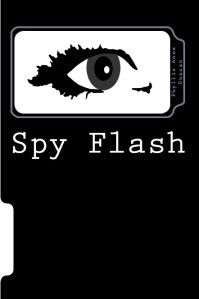
And the cover for Spy Flash? I wanted something dark and mysterious, something that conveyed spying as well as the less exciting aspects of espionage. What better than a black Spy Flash Cover 2.dofile folder and an all-seeing eye?

As of today, I’m waiting for the proof copy of Spy Flash to arrive, and I know when I hold it in my hands I’ll have that giddy feeling of accomplishment. I’m a much better writer twelve years down the road thanks to a lot of people, and I’ll be just as proud of Spy Flash as I was of Rarely Well Behaved. I’ll again rue that my Dad won’t see it and that my brother–the guy who hated to read but read my first book–won’t see this one.

For a long moment I’ll savor that feeling of “yay, me, look what I did,” then reality will set in–lining up book signings and arranging the publicity because, hey, I’m not John LeCarre or Alan Furst. I’m just Phyllis Anne Duncan, who’s pretty excited about the publication of her second, original book of short stories.