SWAG Writers Poetry Fest!

Here’s a pictorial blog today on last night’s great Poetry Fest sponsored by SWAG Writers.

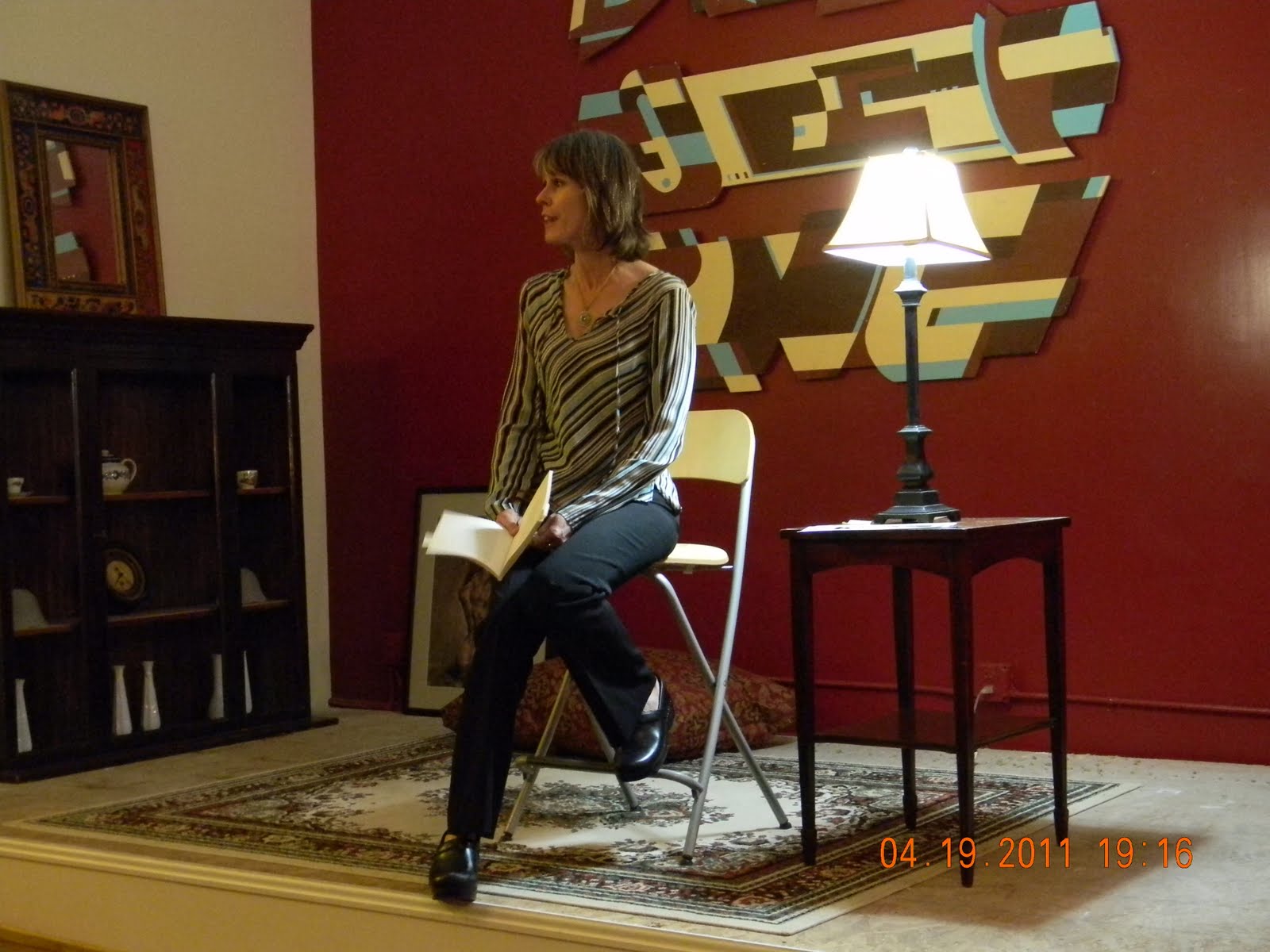
The featured poet was Sarah Kennedy, an Associate Professor of English at Staunton’s Mary Baldwin College. She read from Home Remedies, one of her six books of poetry. Home Remedies contains poems based on real persons from 17th and 18th Century Ireland and Wales. Very evocative to my Irish half.
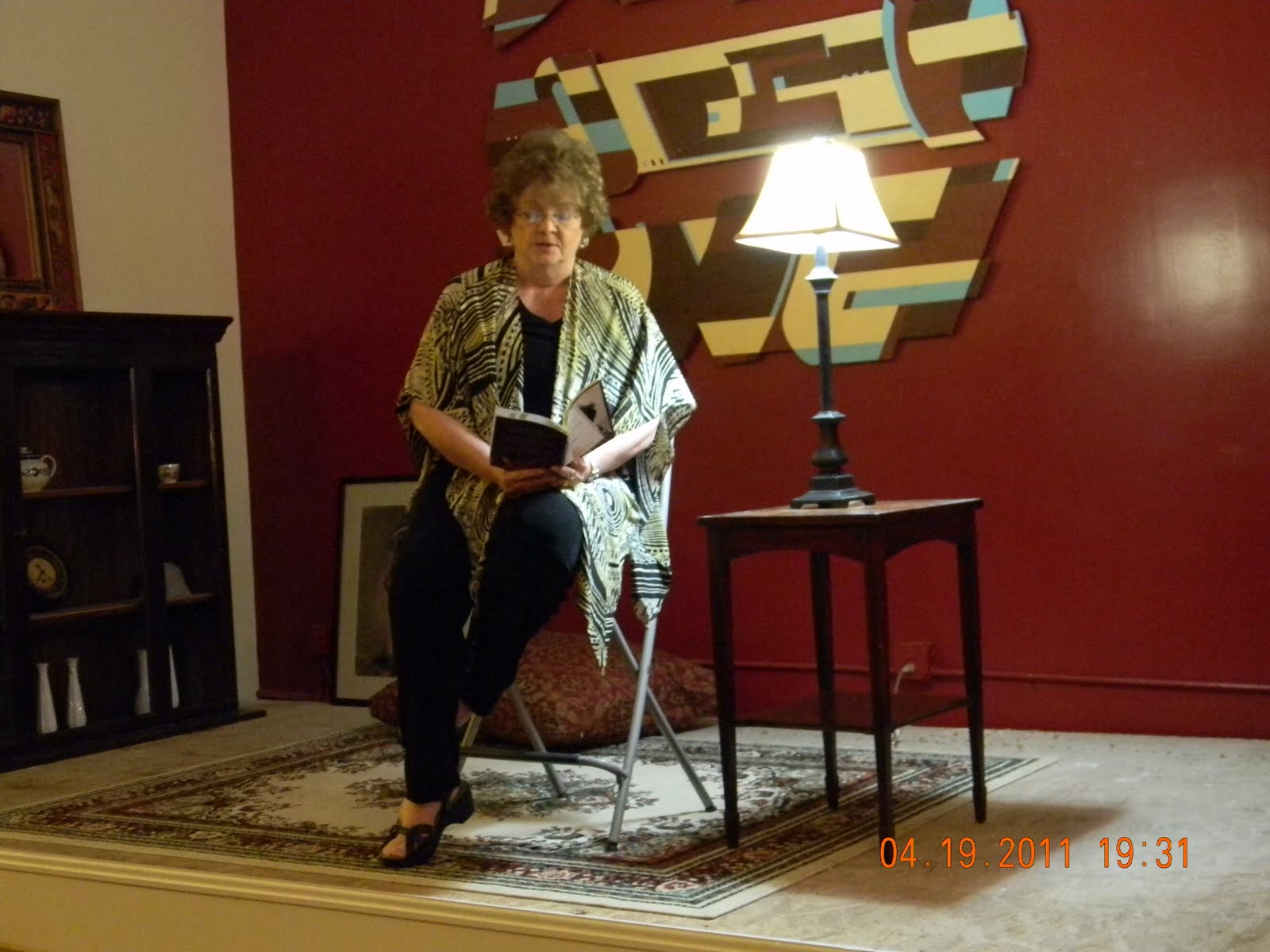
Local poet Lauvonda Lynn Meade Young read from her first book of poetry, Just a Woman. We women in the audience who are her contemporaries–we could certainly relate to her poems! Wonderful glimpses into the life of a woman who isn’t “just a woman.”
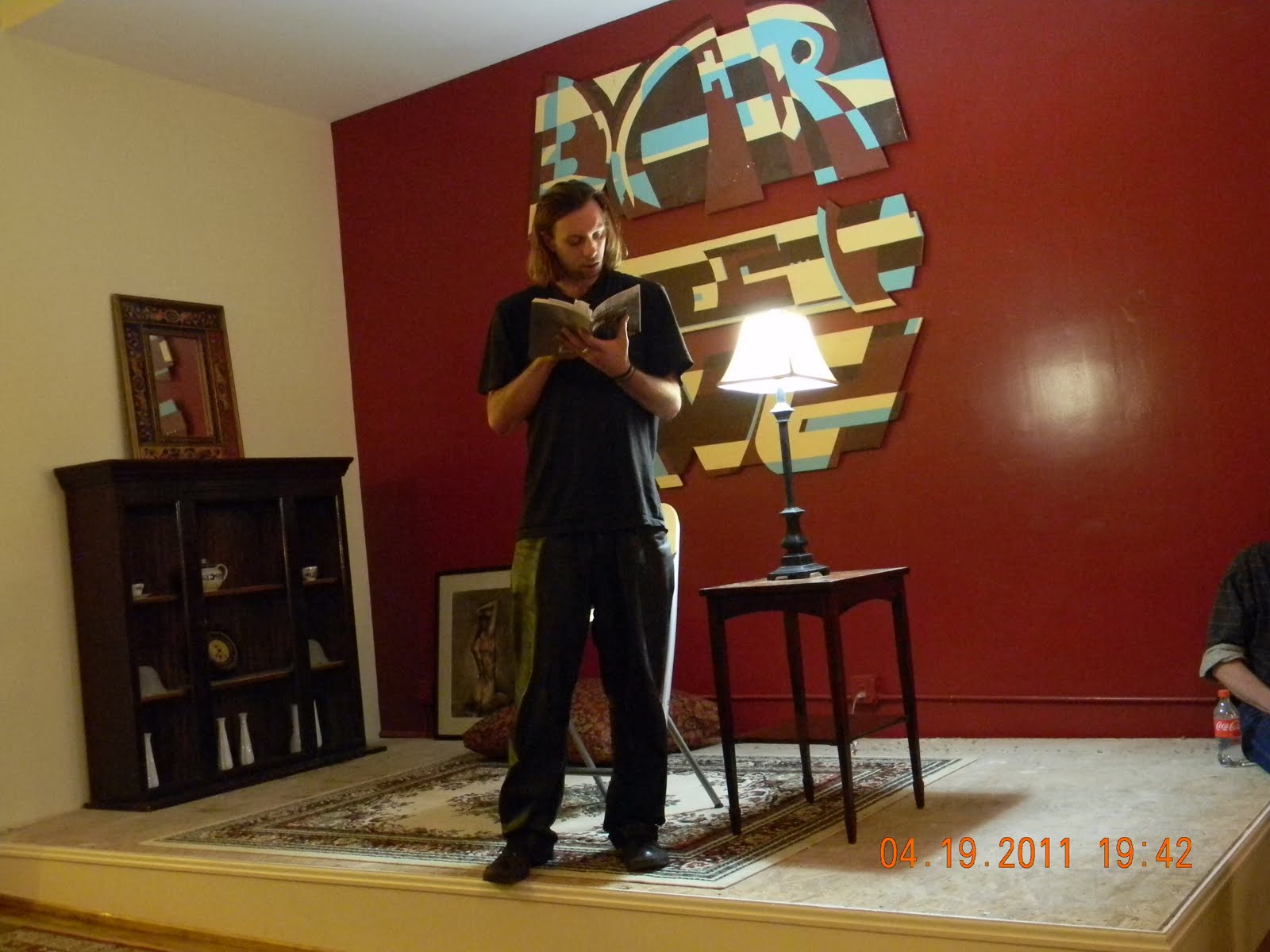
Shea Anthony is a local poet from Fishersville who read from The Forgotten Theatre, one of his two books of poetry. Reminiscent of musicians Jim Morrison, Kurt Cobain, and Trent Reznor, Shea got us all participating in his reading. A great contemporary voice. And, let’s face it, anyone who does a poetry reading in the Valley in black leather pants deserves our attention!
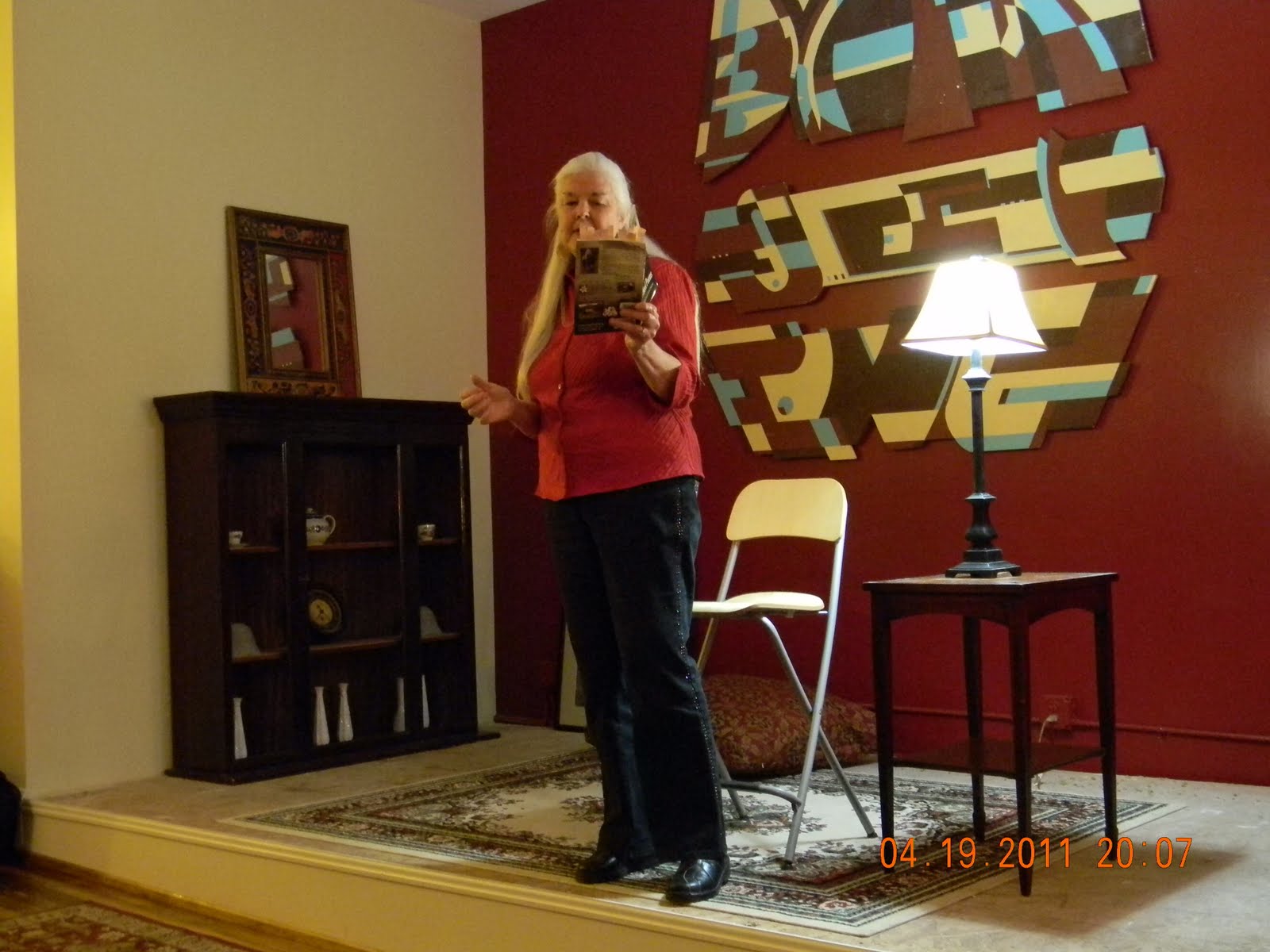
Elizabeth Doyle Solomon often gets inspired while driving the roads of the mountains and the Valley. When that happens, she jots the first few lines on the steering wheel, then finds a place to park to write the rest. Hence, she read from her second book of poetry, entitled, appropriately, The Steering Wheel Poems. Her poems celebrated the wildness of nature around us and lamented how easily we pave over those places of beauty.

Lorraine Rees from Charlottesville read from her second book of poetry, Goodbye Zoo. Her poem about a college ethics professor who hits on all his female students was amusing but full of pathos–and very authentic. She describes herself as the one who “got away.” Great insight.
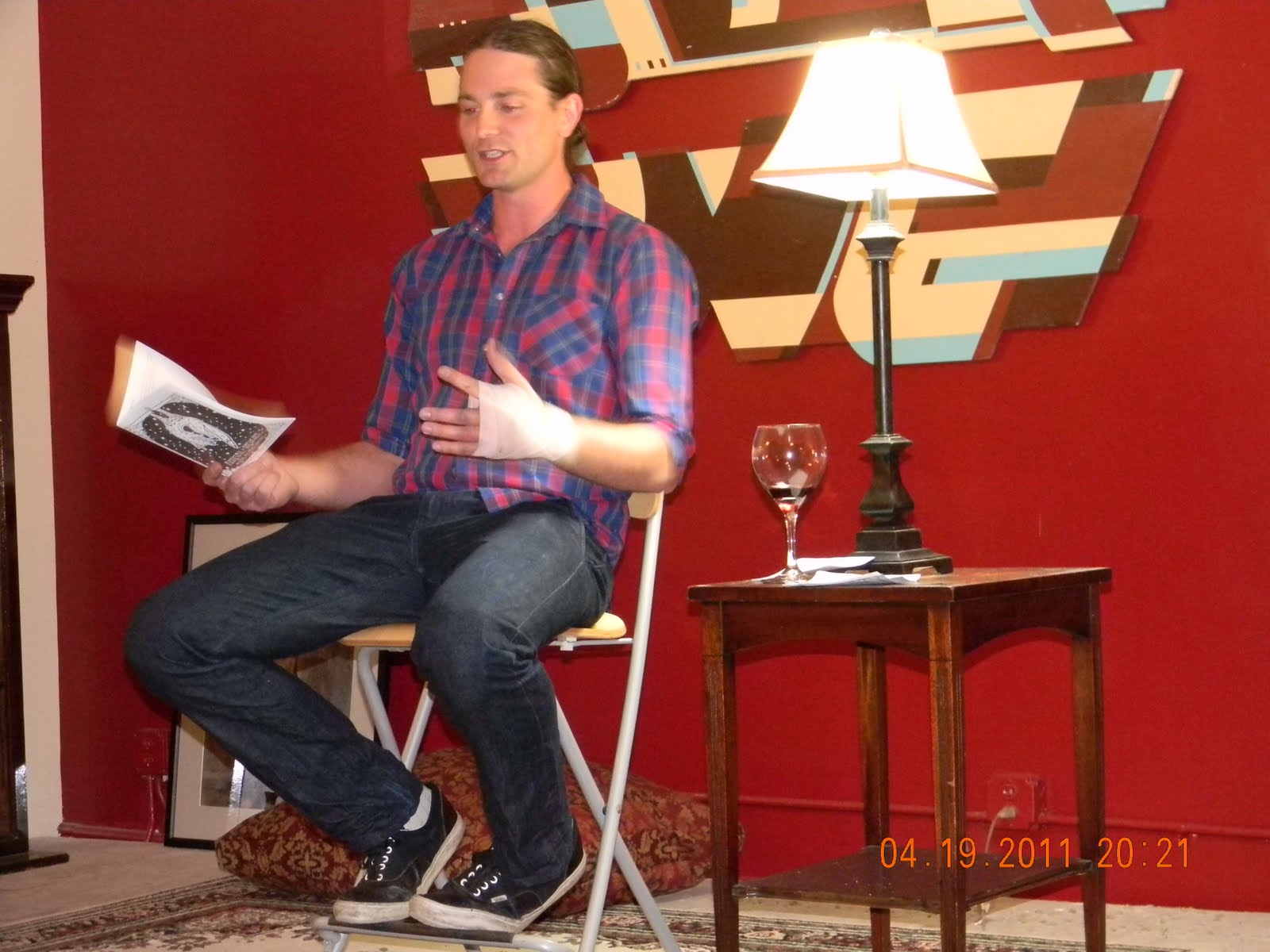
Paul Somers rocked and rolled us with energetic readings from his first book of poetry, Animal Insight, and from several as yet unpublished poems. Later we talked about how he uses humor in his poems to illustrate serious aspects of his life in rural North Carolina. Deeply profane and poignant.

The last, but not least, poet of the evening was Linda Levokove, who read from her first book of poetry, Walk on the Heart Side. Her poems are glimpses, earthy and explicit, into romantic relationships. I related to these most of all because her poems seemed as if they were written expressly for the most important relationship of my life and captured my sense of loss. Overall, though, they so vividly portrayed the wonders of a deep relationship, I could remember all that was good, and I thank her for that.

And let us not forget our hosts for the evening, The Darjeeling Cafe in Staunton, VA, and our master of ceremonies, SWAG Writers founder Cliff Garstang, author of the award winning linked short story collection, In an Uncharted Country.

Quietly Arrayed

For years after my father’s death, I carried a copy of this poem, “Richard Cory,” by Edwin Arlington Robinson in my purse:

Whenever Richard Cory went downtown,
We people on the pavement looked at him:
He was a gentleman from sole to crown,
Clean-favored, and imperially slim.

And he was always quietly arrayed,
And he was always human when he talked;
But still he fluttered pulses when he said,
“Good morning,” and he glittered when he walked.

And he was rich–yes richer than a king–
And admirably schooled in every grace:
In fine, we thought that he was everything
To make us wish that we were in his place.

So on we worked, and waited for the light,
And went without the meat, and cursed the bread;
And Richard Cory, one calm summer night,
Went home and put a bullet through his head.

As a writer of prose, I’m hardly qualified to analyze poetry. Oh, in the variety of English and American Lit courses I’ve had, I studied the form and rhythms, memorized and recited poems for teachers who either dozed through 30+ kids reciting the same verses or criticized that the emphasis on particular words wasn’t quite right, presented Shakespeare soliloquies for final exams.

In my earlier post, “Discovering,” I highlighted some other poets and poems that were meaningful to me, and without getting too maudlin about this one, I thought I’d talk a bit about it as another homage to National Poetry Month. (Yes, I’ve been writing about writing a lot lately and not about “politics, society, and religion,” but don’t worry. I’ve got some socio-political religious commentary about burning books and its fallout roiling about in my head. Just be patient.)

I first read “Richard Cory” in high school. The English teacher walked in, put copies of the poem face-down on our desks, then told us to all turn them over and read. As some read faster than others, you began to hear a cascade of reactions. Then came the discussion. I remember one boy asked to leave the room. Apparently, the teacher had forgotten (or didn’t know) his father had shot himself, but in those days you didn’t run crying to your parents at every trauma. You sucked it up and went on.

“Richard Cory” has been analyzed as everything from a socialist take on modern capitalism, to a lament about the Great Depression, to sentimental sop. Some scholars have speculated that Cory must have had a physical issue–back then the only “acceptable” reason for suicide. Others have commented that despite that outward appearance of success and happiness, he led a lonely and empty life, and that’s what drove him to his final act. Since I was in my early stages of Marxism-Leninism, I probably considered Cory some depraved, exploitative capitalist who deserved what he got.

That poem was no more than a high school assignment for many years and forgotten; then, my father committed suicide one calm, summer morning, though not in the way Richard Cory did, not that any way is preferable. I was muddled for weeks after with that perpetual question, why. He left no note, and, of course, my brother and I, separately, decided it was our fault. Then, the poem “Richard Cory” appeared in the Washington Post. I don’t even know why it caught my eye or why I read it, but I did. In those four, short stanzas with the gut-punch ending, a burden left me.

This poem, more than any therapist who helped me, showed me there are some times when there is no answer to the question, “Why?” Theists, I’m sure, are certain there is an answer, but this poem gave me what I needed to go on.

And that is the power of poetry, that expression, so lyrically, of emotions we would otherwise quash or ignore. Let’s face it, some poetry is pap, and what I like someone else might think is pap. But “Richard Cory,” a short, succinct poem, saved my life, and I’ll just leave it there.
___________

If you’re in the Shenandoah Valley on April 20, please join the Staunton-Waynesboro-Augusta Group of Writers (SWAG) for our Poetry Fest at The Darjeeling Cafe in Staunton at 7 p.m. The featured poet reading her work is Sarah Kennedy. Local poets participating in the read include Lorraine Rees, Shea Anthony, Linda Levokove, Lauvonda Lynn Young, Elizabeth Doyle Soloman, and Paul Somers.