A Friday Fictioneers Anniversary

Today marks one year since our fearless leader Rochelle Wisoff-Fields took over the reins of Friday Fictioneers from our intrepid founder Madison Woods, and it’s true. Time flies when you’re having fun. Rochelle has worked tirelessly at making Friday Fictioneers the “go-to” flash fiction site, and her success is marked by the fact that we “charter members” keep going strong while we add new participants every week. Three cheers for Rochelle!

National Novel Writing Month is just a week away, and I’m all set with character sketches, plot outlines, and plenty of enthusiasm thanks to an online workshop put on by my other writers group, Shenandoah Valley Writers. We called the workshop “Finish That Novel!” but we based it on The Weekend Novelist by Robert J. Ray and Bret Norris. The book had some good points and not-so-good points, but the exercises were certainly useful to me in that I realized I needed some back story to make this novel more understandable.

This year’s NaNoWriMo project is Book Two of a series on the attacks of 9/11. The series is called Meeting the Enemy. Book One, drafted after last year’s NaNoWriMo, is Terror; Book Two is Retribution; Book Three is Rendition.

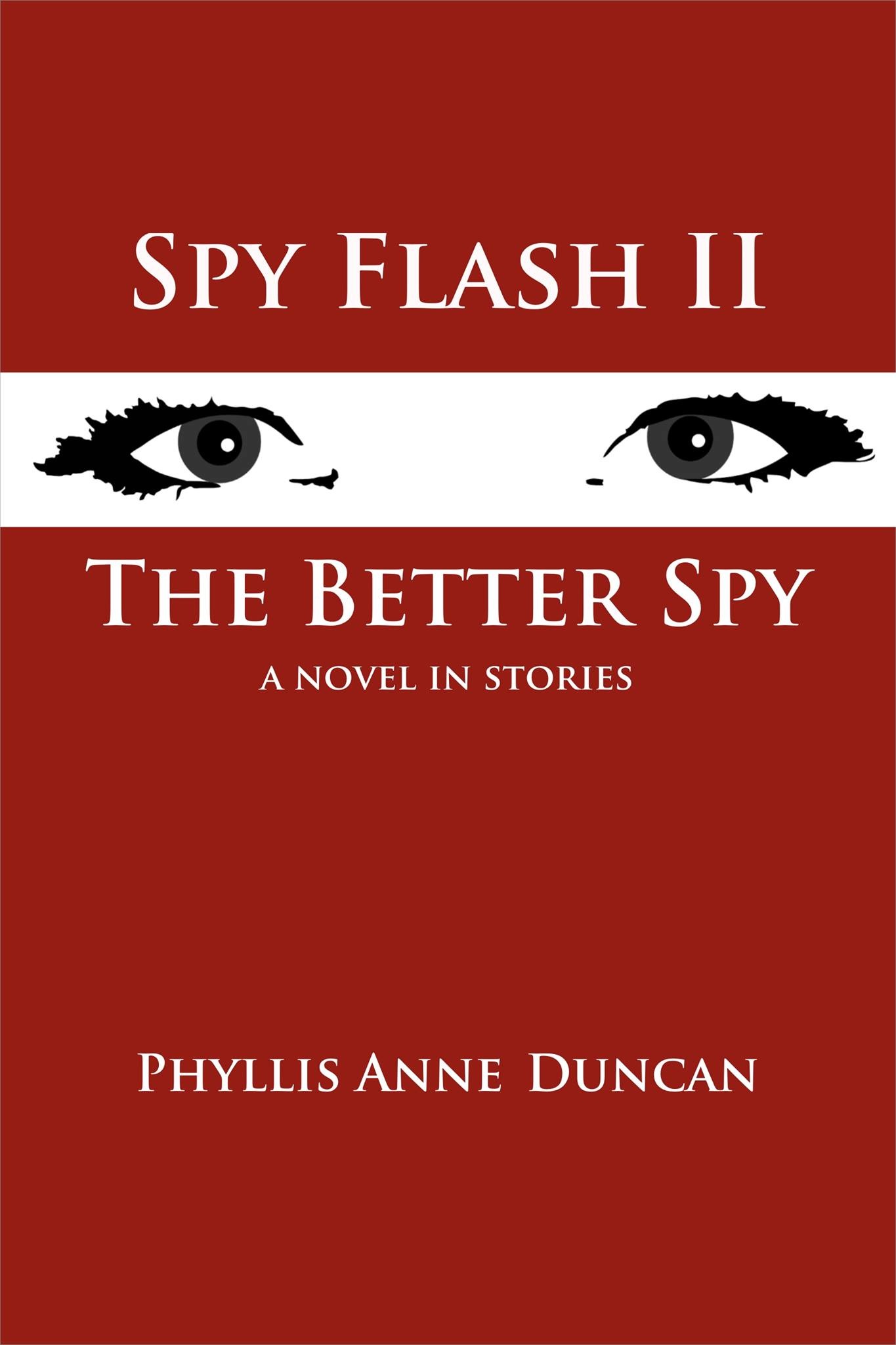
I’m also working on a sequel to my collection of espionage short stories, Spy Flash. Spy Flash II will also be short stories, but they collectively form what’s called a novel in stories. I hope to have that ready to go after the first of the year.

So, I may be going to my last writing workshop of my year of conferencing/workshopping this coming Saturday (“Ending it All” at WriterHouse in Charlottesville), but the writing work continues.

This week’s Friday Fictioneers photo prompt, taken by our fearless leader herself, was a bit of a challenge to the challenge I posed for myself. I’d decided that for the spooky month of October, all my Friday Fictioneers stories would have an edge of the paranormal. This week’s still-life had me scratching my head, wondering how on earth… Then, I remembered the title of a 1982 movie, and off I went from there. My story, “Noisy Ghost,” isn’t quite as scary as that movie, but I hope it’s a little chilling.

As usual, if you don’t see the link on the story title in the paragraph above, scroll to the top of the page, click on the Friday Fictioneers tab, and select the story from the drop-down list.

JRWC13

The annual James River Writers Conference is becoming one of the best weekend conferences around. This was its second year in the Greater Richmond Convention Center and as a part of the Library of Virginia’s literary week celebrations. The conference has grown to accommodate the larger space and the uplift in prestige. This year’s attendees came from all over Virginia and the several surrounding states but also from far western Canada and the U.K.

Like many other conferences I’ve attended, this year JRW classified its panels into tracks, so you could concentrate your attendance in specific areas: Exploring Genre, Getting Published, Improving Your Craft, The Life of a Story, and Promoting Your Book. I spent most of my time for the two days in the “Improving Your Craft” track, because, well, that’s why I’ve been conferencing and workshopping so much in the past year.

The conference started off with a plenary session on Saturday morning featuring poets Brad Parks and Gbari Allen Garrett. Gbari is an eighth-grader in Richmond and rocked the house with poetry which seemed to come from a wise, old man. He’s a rising star. Then, we had pep talks by three people from various aspects of the business, non-fiction writer Christopher McDougall (Born to Run), publisher Carey Albertine, and graphics designer Chip Kidd. Kidd gave a wonderful presentation on the evolution of a book’s cover.

After the Library of Virginia Literary luncheon, featuring the finalists for the Virginia Literary Awards, the panels started. My first one was “Suspense Across the Genres,” which offered techniques for heightening tension. The panelists were Philippa Ballantine (Geist), Christopher McDougall, children’s author Kevin O’Malley (Bruno, You’re Late for School), and Howard Owen (The Philadelphia Quarry). Ballentine writes epic fantasy and steampunk; McDougall is non-fiction; O’Malley writes children’s stories with an edge; and Owen is a mystery writer, so an excellent cross-section of how to imbue your writing with suspense. Each writer emphasized that one way to build suspense is to put characters in “hot-spots.” However, you have to develop that character to the point where he or she matters to the reader, so the reader cares about what happens to the character. An excellent discussion with many concrete examples.

Next was the panel featuring the Virginia Literary Award finalists for fiction, Gigi Amateau (Come August, Come Freedom), Clifford Garstang (What the Zhang Boys Know), Lydia Netzer (Shine, Shine, Shine), and Kevin Powers (The Yellow Birds). Because the questions to the panelists were about their writing process and what inspires them, this was truly a great primer on the craft of writing.

Sunday’s program started off with “First Pages.” Frankly, I always cringe at this type of session, where you submit the first page of your work to be publicly critiqued by a panel of agents and editors, and, in this case, suspense writer, David Robbins. The critique is gentle, and JRW did try to trip up the panel by inserting first pages from authors at the top of their genre, but I never take anything useful away from this, mainly because if you go to more than one of these over a year’s time–and I have–you’ll find the advice from one panel contradicts what another had to say.

“Issues in Personnel Management: All About Characters” was a panel where authors Philippa Ballentine and Lydia Netzer used standard management principles (motivating employees, setting goals, delegating responsibility, communications, and egalitarianism) to describe how the characters in their novels get developed and infuse themselves into the writing process. As a former manager of (way too many) employees, this was an interesting exercise in “managing” the characters in a novel and time well spent.

“Voice Lessons” with panelists Elizabeth Huergo (The Death of Fidel Perez), Lydia Netzer, and Virginia Pye (River of Dust) went beyond point of view to whose voice they used to tell their stories and why it’s important to pick the right voice or voices. The conclusion of the panel was that for a first-time novelist, stick to third-person limited, get that first novel published, then experiment with other voices (e.g., first person).

I went a bit “off track” to the publishing side and attended “What to Do Before You Query.” Agents Deborah Grosvenor, Beth Phelan, and Paige Wheeler covered what they liked to see in a query letter, what they didn’t like to see, and how to prep your manuscript to make an impression on an agent.

I skipped “Pitchapalooza” because I still don’t have the guts to subject myself to that, but I drove home with a lot of ideas rumbling through my head and heightened enthusiasm. JRW’s conference is a great place to meet up with writing friends, old and new, and to pick up tools to help with your writing. Not to mention, picking up quite a few more books for the “to be read” pile.

And congratulations to my writer friend Clifford Garstang, whose What the Zhang Boys Know won the Library of Virginia Literary Award for Fiction.

Friday Fictioneers from Richmond

I’m sitting in my rather nice hotel room in Richmond, VA, so I can make a bright and early start to the annual James River Writers Conference–#JRWC13 if you want to follow the goings-on via Twitter. This is my third year attending, and this is the second year the conference has run concurrently with the Virginia Literary Festival at the Greater Richmond Convention Center–a notch up in prestige and a larger venue.

As part of the Virginia Literary Festival, the Library of Virginia holds its literary awards dinner. One of the nominees this year is my writer friend Clifford Garstang, also the founder of my wonderful writing group, SWAG Writers. So, I’ll be at the dinner tomorrow evening with my fingers and toes crossed that his book, What the Zhang Boys Know, wins the LoV literary award.

If you follow me on Twitter @unspywriter I’ll be live-Tweeting from some of the panels I attend. Should be fun.

Friday Fictioneers LogoThis morning’s drive to Richmond meant today’s Friday Fictioneers story is a bit late. I know I promised a horror theme to each of October’s stories, but this one could be stretched to portray a monster perhaps. Why don’t you read “Adaptive Trait” and see what you think? As usual, if you don’t see the link on the story title in the line above, scroll to the top of the page, click on the Friday Fictioneers tab, then select the story from the drop-down list.

In the Mood to Write–or Not

Seasonal Affective Disorder–the “winter blues,” “winter depression”–whatever name it goes by, it’s a motivation killer. In years past, I had only twinges of it, just a day here and there, but lately, it’s become an issue with my writing.

When I was a federal flunky, there were times in deep December and January when I went to work in the dark, sat in my windowless office or in meetings in windowless conference rooms all day, then went home in the dark. That’s when the winter blues were the worst for me.

Science has shown SAD (apt acronym) is real and has everything to do with the changing amounts of light when falls winds down into winter. Spending the daylight hours outdoors and having bright light while you’re inside helps. What doesn’t help is having a solid week of gloomy, overcast, rainy days in the first half of fall, which is how it’s been here in my part of the Shenandoah Valley. The desire to write is there, but the desire to act on it isn’t.

Yesterday, I sat through a marathon of the BBC version of Pride and Prejudice, six hours by the way, with an open laptop on my lap, and managed maybe a couple hundred words on a story I started before the gloom descended. You might say that watching the work of Jane Austen was daunting, but I usually find Ms. Austen inspiring. No, I couldn’t get the house bright enough, even with every light available on–Dominion Virginia Power will be happy, though. Though I’d had just over eight hours of sleep the night before, I took a two-hour nap late in the afternoon and woke feeling underwhelmed.

I’m sure today when I go back and look at the little bit I wrote yesterday, I’ll likely hit delete a lot. Given how scrambled my brain was, I doubt any of it is worth keeping.

Somewhat like this blog post, I suspect.

I’m seeing the sky brightening a bit, I have a luncheon engagement to get me out of the house, but, frankly, I’m too SAD to be enthused about any of it. As I posted on Facebook yesterday, “If the sun doesn’t shine soon, I’m going to curl up in a fetal position and gibber.”

Gibbering, now.

Friday Fictioneers Fright!

Friday Fictioneers LogoWe’re already nearly two weeks into the scary month of October, and, just as I promised, I have another spooky tale for Friday Fictioneers. I also did a little genre mash-up. If the historical fiction part of it isn’t so obvious–I was raised Catholic and never heard of this particular saint–Google St. Blandine and/or “Amphitheatre des Trois Gauls.” St. Blandine has a direct connection to today’s photo prompt, which is a wonderful photo of the Amphitheatre of the Three Gauls in Lyon, France, taken by Friday Fictioneer Sandra Crook.

My story is called “Martyr,” for reasons I hope are clear. As usual, if you don’t see the link on the story title in the line above, scroll to the top of the page, click on the Friday Fictioneers tab, then select the story from the drop-down list.

Balancing Reading and Writing

Most any writing instructor worth his or her salt will tell you, “If you want to learn how to write, read, read, read.” In particular, read within the genre you want to write. That’s excellent advice; however, none of them manage to impart how to find the time to do that, especially when you have your own writing in the mix.

Like most writers who love to read, I have a literal stack of TBR (to be read) books and a virtual one on my eBook reader as well. I participate in book-reading contests, i.e., set a number of books to be read in a year. Last year I blew right past the goal I set for myself. This year? Not so much. No matter what I do, I’m consistently four books behind my goal, and the about of time remaining in the year is quickly shrinking.

I can, however, pinpoint the cause. I spent most of the summer rewriting and revising a novel manuscript I had a (self-imposed) deadline for, so reading was one of the necessities I put aside. Now, I’m scrambling to catch up so I won’t perceive myself as a failure for not reading an arbitrary number of books in a year.

There’s an offshoot issue of this. When I go to read books in the genre I write, I find them, well, unhelpful. First, they’re mostly, almost exclusively written by men, and the female characters are stereotypical, again for the most part. So, I rarely read thrillers. I substitute non-cozy mysteries by the likes of Sara Paretsky, or speculative fiction by Margaret Atwood.

Now, it’s not that I won’t read thrillers by the late Vince Flynn or Lee Child. I do because within them is how to structure a good thriller, but I go elsewhere to learn characterization. Even though I write what will likely be considered “commercial” fiction, I want to approach it from a literary fiction standpoint, so I read a lot of literary fiction, also, contemporary as well as classic.

And the ultimate thriller writer for me is Stephen King. Yes, his work often falls into the horror/paranormal category, but the man can write; he can develop amazing characters; he concocts intricate plots; he has the most amazing sense of setting; and he eschews those dreaded -ly adverbs. His books also meet the accepted definition of a thriller, and, along with his great tutorial book, On Writing, his body of work is a writing course in and of itself.

Even after all the positives of reading to aid in writing, I still feel guilty when I devote a day to reading–I should be writing. I also feel guilty when I devote an entire day to writing–I should be making a dent in that TBR stack. To put in contemporary social media terms: I have a #firstworldproblem.

For every writer friend I have who gets the fact you have to read to understand how to write, I run across someone who declares he or she has no time for reading, “I just want to write.” One of the writers I follow on Facebook is Anne Rice, probably an icon for a successful writer. She is always posting about the books she has read and what about writing she has learned from them. So, I think you can balance her approach against the “writer” who doesn’t see the need to read and gauge which one is a writer, not a scribbler.

So, I’ve been writing long enough. Off to do some reading–Stephen King’s Doctor Sleep, by the way.

The Friday Fictioneers of October

Pumpkins have started to pop up everywhere. Leaves have begun to display color. The air is crisp… Well, our dog days of summer here in central Virginia arrived a bit late. We’ve been in the 80’s the past few days. Richmond hit 90 degrees a day or so ago. Eighties wouldn’t be so bad without humidity, but it’s the south. We have humidity.

Still, this is my favorite time of year. It’s as if I’ve been running all out up until this point, then I take a breath and wind down–as much as one can do that with Thanksgiving and Christmas looming. Something about the fall makes me begin to reflect on the previous part of the year. So, let’s have a look.

I entered a bunch of contests and made a bunch of submissions. I placed third in one contest, and all the submissions were rejections save one; but its notification date is March 2014 and could still be a rejection. (There will be twenty to twenty-five works in the collection, and the editor has already received more than 200 submissions; the odds aren’t great.) I’ve revised and rewritten a novel which a workshop instructor believes has definite promise for being picked up by an agent. I’ve edited and revised other manuscripts, participated in two weekly flash fiction events, and again amassed enough espionage short stories for another collection. I’ve been to ten writers conferences or workshops, participated in two on-line workshops, and taught one on-line workshop.

A busy writerly year, and I can’t even describe how fulfilling that is. As the go-to analyst/tech writer in my government job, I probably wrote a lot more than I do now on a daily basis, but the key difference is time. The deadlines I had in my job were rigid and often capricious, the whim of some congressional staffer with an overblown ego. Though the feedback was always good about a white paper or a report or a Q&A I did, I never felt as if that work were polished enough. I’d always come up with a better way of saying it. Now, thankfully, I have luxury of time to make certain what I write is the best it can be.

And I don’t take that for granted. I have too many writer friends with full-time jobs and families they juggle with their writing. I know how precious it is. I admire these writer friends so much for being dedicated enough to their writing that they make it a priority among all the other priorities they have. After all, that was I not that long ago, and I’m glad to have them in my writer life to keep me humble.

Friday Fictioneers LogoOctober is also a spooky month–it culminates in Hallowe’en, after all. So, it’s not surprising that today’s completely innocent-looking Friday Fictioneers photo prompt sent me into Stephen King-land. The fact I’m reading his sequel to The Shining, Doctor Sleep, may have something to do with my story, “White Noise,” as well. I’m going to see if I can’t make every Friday Fictioneers story this month have a little bit of horror going for it. Bwahahaha!

As usual, if you don’t see the link on the story title above, scroll to the top of the page, click on the Friday Fictioneers tab, then select the story from the drop-down list.

The Places We Write

This past weekend I spent a brief time in a place where I used to spend a lot of time–eastern Connecticut. My ex, before he was my ex, and I spent as many weekends and holidays as we could on a small lake that spanned the Connecticut/Rhode Island border. The lake is called Beach Pond, and up until a few years ago it had a small beach on the Rhode Island side; hence, the name. Our lake house on the Connecticut side had a small lakeside yard and dock, a large deck, and a great view, which looked across the lake onto the Acadia State Park in Rhode Island.

On the drive from Providence Airport to Preston, CT, where I stayed at my ex in-laws, I have to pass by Beach Pond. I’ve only done this three times since I was last there in 2005 before the ex became the ex. For some reason, last Friday on the third time, I recalled that I wrote most of the rough draft of what’s now a four-book series at the little gray house on the lake.

Now, I’m not much of a water person. I’m a pool swimmer, and bodies of water with fauna in it make me a bit nervous, but sitting beneath some good-sized oak trees with a beer at hand, and notebook or laptop with me, I was in writer heaven. On the weekends, the place was very active in the afternoons–water skiers, JetSki-ers, canoers, kayakers–but in the mornings, the place was quiet and still.

My ex had, as one of his many good qualities, an ability to understand what writing meant to me. He knew it went far beyond the fact I did technical writing for a living. He knew what I wanted to do with my writing, and he encouraged it. He never once complained about the fact a notebook accompanied every vacation we went on and that some part of the day had to have writing in it.

At Beach Pond, he would hop into a small row boat and explore all the various nooks and crannies of Beach Pond, and I would write–pages and pages, sometimes by hand, sometimes on a monstrosity of a laptop (This started in the late nineties.) After two years of these getaways, I had a complete rough (very, very rough) draft of a novel.

I don’t know why I hadn’t thought of that until last Friday as I passed by Beach Pond and felt nostalgia for the happy times I’d had there, but the feeling was something like remembering where you had your first kiss or the first time you made love to someone. The place has an unending significance. This is where I wrote my first, real novel. This is the place whose quiet beauty helped inspire me to do that.

Now, inextricably, that place will always be associated with that particular manuscript. Someday, I’ll turn the pages of the books it has become, and I’ll hear the lap of wavelets against the bulkhead, the rhythmic splash of the oars on the row boat as my ex explored a place he’d known since he was a child all to give me the time to create.

Place, or setting, within a novel is often crucial to its plot, but don’t forget the place where you wrote it. That could be just as crucial–and special.

A Doorway to Friday Fictioneers

I normally post my Friday Fictioneers story on, well, Friday, because it ain’t Thursday Fictioneers. However, bright and early tomorrow I head to the airport for a weekend trip to New England to visit some old friends. I probably won’t get much writing done, but it’ll be fun.

After this weekend, the countdown to this year’s National Novel Writing Month begins, but in October I need to lock down that manuscript I had out to beta readers and get it ready to send off to my workshop instructor. Lots of nerves going on there. And I have two more Spy Flash stories to finish so I can get that next volume in a state to be edited and hopefully ready for publishing at the first of the year. In between all that will be Thanksgiving and Christmas. Oh, and a writing conference.

Yeah, retirements means sitting on your ass and doing nothing. Sure it does. Wouldn’t trade it for the world, or a job.

Friday Fictioneers LogoSo, for a long-time Whovian (Google it), today’s Friday Fictioneers photo prompt was just too tempting. Think of it not as fan faction but, rather, an homage with a twist. What else would you come up with after seeing the photo but a story about a door to nowhere, or maybe somewhere?

My story is “Time and Relative Dimension.” As usual, if you don’t see the link on the title, scroll to the top of the page, click on the tab for Friday Fictioneers, and select it from the drop-down list.

Defying a Ban

Today’s writing blog post crosses ever so slightly over into political commentary, so if you have qualms about my protesting the fact people want to ban books, you might want to skip this post.

Satanic Verses

Written work has probably been banned since the beginning of written communication. I’m sure some Cro-Magnon shaman who disagreed with the way a hunt was depicted on a cave wall forbad his or her tribe to view it. And, as it’s always been, forbidding someone from seeing something usually results in an overwhelming desire to see the forbidden thing.

Religion and political power always seem to raise their heads in these disputes. You can’t read this book because it goes against the Bible. Only if you’ve read the Old Testament do you appreciate that irony. People who look to the Bible as their moral guide in deciding which books you should and shouldn’t read conveniently overlook the fact that particular book is rife with rape, murder, infanticide, lust, political corruption, and incest among other distasteful things, which go largely unpunished. Governments have banned works–Stalin’s successors didn’t like the way Boris Pasternak portrayed the Soviet system and banned Doctor Zhivago; the Nazis held massive book-burnings designed to expunge the Reich of anything with a Jewish or Communist taint; Salman Rushdie had a fatwa issued against him by Islamic fundamentalists for The Satanic Verses.

Of course, Pasternak received a Nobel (for his poetry) two months after Doctor Zhivago was published outside the Soviet Union. The Nazis met their inevitable end in the spring of 1945. Rushdie, after being guarded in undisclosed locations for years, has a long (a very long) list of awards, including the Booker. All, as well as countless other examples, are testaments to the power of the written word and the fact people don’t like being told what they can and can’t read.

And lest you think this is a thing of the past or only occurs in regressive dictatorships, think again. A county in North Carolina recently banned 1952’s The Invisible Man by Ralph Ellison. Considered one of the best books about racial identity and prejudice, The Invisible Man won the National Book Award in 1953 and has been a mainstay on high school reading lists since. Just not in a particular county in North Carolina, where a school board member said, “I didn’t find any literary value.” (Translation: Our precious white boys and girls do not need to read about the problems with racial identity; it might make them tolerant.) After that county’s decision, sales of The Invisible Man shot up, for which, I’m sure, the Ellison estate is truly grateful.

When we write–at least when I do–we don’t think about whether or not our work will be banned by some religious prig or overbearing politician. Self-censoring is just as bad as government or church censorship. It inhibits our craft. Do my fingers hesitate over the f-word when I’m writing? No, because if I drop the f-bomb, it’s because it’s central to the character using it. We have to write the story that’s in us. Anything we do to alter that means it’s not the right story and that we’re not truly writers.

This last week of September is the American Library Association’s Banned Books Week. Libraries around the country highlight books, which have been banned for various reasons, putting them on display and encouraging people to check them out. Librarians are quite often at the forefront of complaints about books, and it’s the courageous ones who stand up to the book-burners, whether literal or figurative. (Click here for a list of ALA’s most challenged books from 2000 – 2009. Some won’t surprise you; others will shock you.)

If you don’t want your child to read the Harry Potter series or R. L. Stine or Toni Morrison or Ralph Ellison, then don’t buy those books. Tell your child they’re not to be read. (Understand, though, that forbidding something makes it ever so much more desirable.) You’ll end up with an intellectually stunted child who won’t be able to handle the real world, but that’s your choice.

However, don’t tell me I can’t read them or that my child can’t read them. Is that limiting your First Amendment rights? No, because you’re free to opine all you want about what you find objectionable about a particular book, but you can’t force your narrow-minded opinion on others whose minds are open to knowledge.

There is no irony in the fact that the books people seek to ban are the ones which expand our knowledge, which challenge facts we shouldn’t accept on face value. Trust me, I never would have learned about the real facts of life (and not the confused mess my mother told me because she found sex disgusting) had one classmate not circulated a much-thumbed copy of Everything You Ever Wanted to Know About Sex but Were Afraid to Ask. I never would have learned to question authority without Animal Farm or 1984. I never would have understood the horrors of war if not for The Red Badge of Courage or All’s Quiet on the Western Front. I never would have learned about the negative aspects of letting money rule your life if not for The Great Gatsby or Bonfire of the Vanities. I would have followed my family into intolerance had I not read To Kill a Mockingbird or, yes, The Invisible Man. And, I never would have learned about the dangers of banning books if I hadn’t read Fahrenheit 451. Somewhere in America, at some point, all those books I mentioned have been banned, and, thank goodness, those bans didn’t work.

Even now, when I hear some puritanical school board has banned a book, I want to read it. I want to know what they’re afraid of so I can emulate the author. Yes, that’s how I’ll know I’ve “made it” as a writer–when some troglodyte bans a book I’ve written.

Celebrate Banned Books Week–read a banned book in public and piss off a book-burner. You’ll feel better for it.