AWP Day 3

As you read this, I’ll be making my way to O’Hare to head back to the Shenandoah Valley. I loved being in Chicago. It’s been a long time since work took me there for a two-week period, but I’d forgotten how much I love city skylines. Yesterday, we had low clouds and snow flurries, and it was cool to see the tops of skyscrapers disappear into the clouds. Lake Michigan was gray and chilly looking, but as much as I love my mountain view at home, Chicago is a beautiful city to gawk at.

I loved being around so many other writers–overhearing the bar conversations was a high point of my day. Writers talk about their characters as if they were real people, and I was glad to see that wasn’t eccentric. They talk about craft and rejections and where is the idea for their next book going to come from–all the things that I can relate to, and that’s comforting. But, let’s see how Day 3 went for me.

BTW, if you get to Chicago, go to Kitty O’Shea’s, an Irish pub in the Hilton on Michigan Ave. Great pub food, great beer, great Irish history decor. I had lunch there every day and wish I could transport it to the Valley.

“Connecting with Readers via Your Website and Social Media” appeared, on paper, to be a promising seminar for first thing Saturday morning. I’m not as self-conscious about technology or social media as many of my contemporaries. I was too much of a Trekkie for that. I built a computer in the early 1980’s and was on-line with CompuServe (remember that) at about the same time. Still, social media was something I initially regarded as being for “the young folks.” (Amazing how we reach the point where we sound like our grandmothers, isn’t it?)

I started using Facebook for the typical reason a white female over 50 does—to keep up with her grandchildren. Then, I moved to where they live, but I stayed with Facebook because I found that writers had Facebook pages, and I could pretend to be friends with them. I consider myself still a dabbler in both Facebook and Twitter, though I’m learning how to use each to better benefit for my writing life. I’ve blogged for a couple of years now, and I rather like “following” on Twitter some of my literary icons—Salman Rushdie, Margaret Atwood, Neil Gaiman, and so forth.

Since I’d like to be more than a dabbler in social media, I went to this seminar eager to pick up useful tips. And I did—from the last panelist. When a seminar on how to use social media starts with a panelist who tells you she turned down the offer twice before accepting, that she has a YouTube channel which she doesn’t update, that she doesn’t Tweet and doesn’t update her Facebook page, and has a website that she generally ignores until a book comes out, you begin to think it might be a waste of time. I’m leaving off the names of the panelists for a reason.

Indeed, several of the first few panelists confessed their fear of, distaste for, and dread of websites and social media. One said very little on the topic but used the opportunity to do a reading of a self-indulgent essay about seeing the wild ponies from Chincoteague—then alluding to the fact his walk along the poop-laden beach was in Maryland. (It’s Virginia.) His social media connection was that a Facebook follower had mentioned his work had taken on a depressing tone and that make him examine his work. Really? That was it?

The final panelist, whose time had been shortened by the others’ going over time and not understanding how to use the laptop provided to display websites on a screen, was the only one to give practical tips and suggestions:

  • Use only the social media you’re comfortable with; don’t try to do it all
  • What social media you do us should be a facet of your personality; just remember nothing you say is private
  • Use Facebook and Twitter as your water cooler if you work from home; they help to keep you from being insular
  • Recognize you might discouraged by posts and Tweets from other writers about their success; don’t be bitter or jealous but be fulsome with your congratulations–you never know the connection you might make
  • The more you give–compliments, praise, congratulations–the more you get from social media
  • Since it’s so easy to create a website, do it now! Even if you haven’t sold a book yet, do book reviews of others’ work, link to writing websites or writing contests or even other writers’ sites
  • If you love an author’s work, use social media to connect and tell him or her so
  • If you’re not comfortable with social media, make certain you approach publishers who will help you, not reject you because you don’t have a platform

Next year, he should do the whole panel, and that would improve its practicality. My first, small disappointment of the conference.

I’m avoiding the Book Fair today because I’ve no room left in the single suitcase I brought. As it is, United is likely to charge me an overweight fee for it in addition to its usual $25 rip-off, I mean, baggage fee.

Because a computer problem at my hotel kept me from printing out my boarding passes and the subsequent 20 minutes on the phone with United Airlines, all the afternoon sessions I wanted to attend were SRO, or sitting room only as well. I didn’t want to subject myself to that indignity, so another quiet afternoon writing, followed by packing to go home. Is it time for that already? I just got here. I’m having too much fun, and now I have to go home? As far as I’m concerned this could go on a few more days—or someone needs to invent that time machine so I can go back and attend all the seminars I wanted to attend in the same time block.

Yep, I’ll be in Boston next year for AWP13.

AWP Day 2

Because I exhausted myself on Day One of AWP, I decided to ease up on Day Two and spend a lot of time (and money) in the Book Fair. I did start the day with two seminars, on opposite ends of the literary spectrum.

“The Fiction Chapbook–A Sleeper Form Wakes” was nothing less than fascinating. For those of you who don’t know what a chapbook is but don’t want to Google it, it’s a small, self-contained book originally produced to fit in the pocket. They started out as the precursors to the printed, bound book we would recognize today, but as societies became more literate and wanted to show off that fact, novels became the rage. Chapbooks became a form of publishing poetry. My high school English teacher loved chapbooks, and when we had the poetry unit in American Literature, we had to make a chapbook of our poems. Since I’m not a poet, I probably tossed it away as soon as I got a grade on it. Silly me.

Chapbooks have now become a hot, new way to publish short fiction in limited runs. That makes them popular for for-profit presses as well as an excellent way to introduce an author to an audience. Chapbooks are especially ideal for flash fiction. The panelists–Nicole Louise Reid, Eric Lorberer, Diane Goettle, Kevin Sampsell, and Abigail Becket–are all publishers of chapbooks and are enthusiastic about this new direction in publishing. Their enthusiasm must have been contagious because I stopped by their tables in the Book Fair and bought four chapbooks: Field Guild to Writing Flash Fiction, edited by Tara L. Masih; Betty Superman, by Tiff Holland; I Take Back the Sponge Cake by Leon Erdrich and Sierra Nelson; and an anthology of chapbooks, They Could No Longer Contain Themselves by Elizabeth J. Colen, John Jodzio, Tim Jones-Velvington, Jean Lovelace, and Mary Miller. I’m looking forward to delving into them.

The next seminar I went to sounded right down my alley. I love apocalyptic writing. From Harlan Ellison to Margaret Atwood, I savor these stories of what would happen to us as humans were the unthinkable to happen. “Apocalypse Now: A Multi-Genre Reading of Apocalyptic Literature” featured two prose writers and two poets who have written about the end of the world. The poets were Brian Barker (The Black Ocean) and Judy Jordan (Hunger), and the prose writers were Pinckney Benedict (Miracle Boy and Other Stories) and Kevin Brockmeier (The Illumination).

I’m not known to collect poetry, unless it’s Seamus Heaney, but Barker’s reading, from The Black Ocean, of his poem, “Gorbachev’s Ubi Sunt from the Future That Will Soon Pass” was so dramatic, I went right to the Book Fair and bought it. The same with Miracle Boy by Benedict. And I got them both signed.

Jordan’s reading of a long poem about the time she was homeless was, she admitted, not technically apocalyptic, but the raw dread the poem evoked could have portrayed the end of the world. It was transportive. Brockmeier brought us the unusual concept that whatever has happened to the world makes our pain shine literally from us. He only read an excerpt, but it was easy to envision how the illumination could become too bright for us to look at.

The Book Fair could stand alone. I never knew there were so many literary magazines and specialty publishers, and, so, there are twelve new books to add to my already-laden shelves. But, where else could you find a fascinating book entitled, From Three Worlds: New Writing from Ukraine?

Then, my feet said, enough, and I retired to my hotel room to do exactly what this conference is all about–write.

AWP Day 1

Sorry, no Friday Flash Fiction today. 😦

The 2012 Association of Writers and Writing Programs (AWP) Conference in Chicago is exhausting, exciting, stimulating, tiring, fun, overwhelming, and a lot more descriptors than I can’t think of because I’m, well, pooped. But it’s a good kind of tired. Why? I’m surrounded by 10,000 fellow writers and a book fair bigger than any I’ve ever experienced. I may need to buy a second suitcase to get the books I’ve bought back home.

There are dozens of workshops each day, many of them so tempting you need to be three, or five, people to get to them all. Though many of the workshops are geared toward people who teach writing in high school or college, there are plenty for the rest of us.

On Thursday, I started a marathon day with “The Long and Short of It: Navigating the Transitions Between Writing Novels and Short Stories.” The panel was composed of writers who’d either gone from short stories to novels or vice versa. Moderated by Bruce Machart (The Wake of Forgiveness, Men in the Making), the panelists were Hannah Tinti (The Good ThiefAnimal Crackers; Tinti is also the editor of the online literary magazine One Story), Melanie Thon (Sweet Hearts, Girls in the Grass), Erin McGraw (The Seamstress of Hollywood Boulevard, The Good Life), and Kevin Wilson (The Family Fang, Tunneling to the Center of the Earth).

The key thing I took from this excellent seminar was that you can’t think of novels as expanded short stories nor short stories as shrunken novels. I’d always felt that way; I just hadn’t had it articulated so that I grasped it. The panelists were in agreement that they fret over short stories more “because every word is a potential for a mistake.” Writing novels are more “low gear,” and you have the luxury of knowing you can have “extra words” as a cushion. The panelists disagreed on switching between the two. One described himself as linear, having to finish a short story before he can move on to a novel. Another moves between novels and short stories in progress, using each to counter spots in the process where the work has become bogged down.

Another thing I could relate to was starting to write and not really knowing where the story is going–or the flip side, thinking it’s going one way, and it strikes out on its own. My recently published short story, “Trophies,” started out as a fun exercise describing, from a fish’s point of view, what it’s like to be caught. The story then went to a place I’d avoided writing about for many years and was much different from what I’d originally intended. It was nice to know I’m not odd that way.

Next came “Thinking with Your Own Apparatus: Fiction Writers and History.” Joyce Hinnefeld (Stranger Here Below) moderated Eugenia Kim (The Calligrapher’s Daughter), Dolen Perkins-Valdez (Wench), and Nalini Jones (What You Call Winter), all authors of non-contemporary historical fiction.

Kim and Jones write about their mothers’ cultures, Korean and Indian respectively, and they described the issues arising with not being immersed in that culture until they decided to write about it. Perkins-Valdez, who writes about African American slave women in the Civil War era, described an emotional trip to the Museum of the Confederacy for research. All emphasized the need for research and accuracy–because someone, somewhere will find the tiny error in language that slipped past. They also urged writers not to forget the characters amid all the historical detail–historical fiction “captures a feeling” and the reader has to like the history but must care for the characters.

After lunch, I attended “What I Wish I’d Known,” a panel of newly published authors who discussed the process each underwent to become published. One thing is for sure–none of those processes were the same. Rebecca Rasmussen (The Borrower) wished she’d known, since her book was about a librarian, that she should have run it past a librarian. The librarians who have read it, she said, have loved it, but they’ve pointed out all the things librarians don’t do.

Jeffrey Stepakoff (The Orchard) started out as a playwright and screenwriter, and he wished he’d known just how much he had to do to “sell” his book inside the publishing house, i.e., cultivating relationships with the cover designer, the marketer, etc. Nor was he prepared for readers having such direct access to him as a novelist, rather than a screenwriter.

“Don’t listen to conventional wisdom about what you should be writing” was what Elizabeth Stuckey-French wished she’d known. Her three books–Mermaids on the MoonThe First Paper Girl in Red Oak, Iowa, and The Revenge of the Radioactive Lady–afforded her different publishing experiences, but she came away from all three understanding that editors and agents do what they do because they love books. However, writers have to remember those editors and agents are also business people, not your BFFs.

Kim Wright (Love in Mid Air) was surprised at how much promotion she had to do for her first novel, though she enjoyed the process of being the primary advocate for her work. She cited her “writer’s paranoia”–she looked around her publisher and was convinced, as a new author, she wasn’t getting the same support as more established authors. Then, she found out the established authors thought she was getting more attention than they were! She especially wanted to dispel the myth that once you get that first book sold, you’re in like Flint. No, she said, “you keep having to go back through the door, as if it’s the first time.”

All the panelists agreed that hindsight on the publishing process for them was 20/20.

The final workshop of the day for me was “There Will Be Blood: Violence in Fiction.” Because I write espionage fiction, I wanted to make certain I was setting the right balance, i.e., that the violence was critical to the story and not gratuitous. The panelists were Alexi Zentner (Touch), Antonya Nelson (Bound), Benjamin Percy (The Wilding), and Alan Heathcock (Volt), and each emphasized that, often, the “invisible violence” is the most shocking or startling, that you don’t have to go for the blood and guts. Nelson said, “You can be more menaced by what you don’t see.” Holt said that violence in fiction is a lot like a sex scene in fiction: “It can be coy, clinical, or creepy.” Yet, they all emphasized that if the violence is “inauthentic,” it isn’t worth reading–or writing. As long as you don’t use violence as an end, it can be a critical part of the work. Another thing I’m getting right, apparently.

The day wasn’t over yet. That evening was the keynote address of the conference, and if I went to nothing else for the whole conference, I was going to this. Margaret Atwood, the premiere author of dystopian fiction, was the speaker. She began with a greeting to “all my Twitter followers,” which got a big round of applause. There were a lot of us in the audience. Atwood was funny, charming, and informative in a brief re-telling of her writing life. The 73-year old laughed at the recurrent rumor that she had died but emphasized that you have to write to maintain your relevance. In her case she’ll be relevant for a long time. It’s always great when someone you admire lives up to your expectations. As she left the stage to applause, she lifted the arm of the sign language interpreter and had her take a bow with her. A classy lady.

A long, but fulfilling first day. And tomorrow is another one.

In Memoriam

I’m a wannabe journalist, but I was an aviation journalist. The toughest assignment I had was doing interviews and shooting photos in the July heat of Oshkosh, WI. I admired from afar the journalists who went into war zones or areas of conflict, when the war wasn’t “official,” and worked hard to show the rest of us what was really happening. I knew, intellectually, journalists sometimes got killed in areas of the world where governments don’t respect Freedom of the Press. Having someone you admire killed on behalf of truth brings it close to home.

In the 1990’s I had two, particular journalist heros–Veronica Guerin, who exposed crime at high levels of Irish society, and Anna Politkovskaya, who wrote first about the Russian debacle in Chechnya then corruption under Vladimir Putin. Both were murdered, Guerin by the mobsters in the Gilligan gang she exposed. No one was ever convicted of her murder, though one Gilligan gang member provided information about the murder in exchange for entering Ireland’s Witness Protection Program. The three men arrested–one with a vague Russian State Security link–in connection with Politkovskaya’s murder were acquitted.

Washington, DC’s Newseum maintains a Journalists Memorial, which contains the name of every reporter killed while pursuing the story anywhere in the world, as well as biographical information on each journalist. The list begins in 1837 with the death of Elijah Parish Lovejoy, who was killed by a pro-slavery mob as he protected the presses for his abolitionist newspaper, The Emancipator Extra.

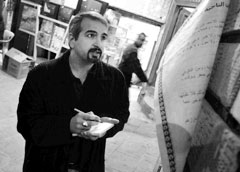
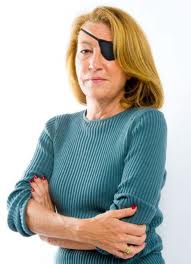
In the past two weeks, unfortunately, three more journalists will join Lovejoy and 2,083 others on the Journalists Memorial: Anthony Shadid, Marie Colvin, and Remi Ochlik. All three died in Syria, working to show the rest of the world the truth of Bashir Assad’s brutal regime.

Shadid, originally from Lebanon, was known and respected for his balanced reporting about the Middle East. He was respected by all religious factions in the area because of his fairness, and the fact he knew what he wrote about. He died from an asthma attack, a death far from ignoble. He knowingly went into an area where he knew medical supplies were limited. Sometimes, the story is important enough.

Colvin was said to be fearless, and she knew first hand the dangers of telling a story a repressive government didn’t want the world to know: David Blundy, who hired her for The Sunday Times, was killed reporting in El Salvador. Colvin’s reports from Homs, Syria, were raw and uncompromising. She died, along with Ochlik, at a makeshift press center, which might have been targeted on purpose by Syrian government forces. (Shrapnel cost Colvin her left eye while she reported on conflict in Sri Lanka.)

Ochlik, only 28, wanted to be an archeologist as a child in France, but when his grandfather gave him a camera, he took to it at once. He had a talent for capturing in his photos the emotions of a demonstration, and he was best known for covering the 2004 Presidential elections in Haiti. He returned to Haiti in 2010 to cover the cholera epidemic. Haiti, he said, was his war–“It was where I always dreamt to be, in the action.”

When you read or see journalists, pause for a moment and acknowledge that many of them go to places and into situations the rest of us would never have the guts to go. They show us truth.

Having a Life vs. Writing

Yesterday, here in the Shenandoah Valley, we had one of those picturesque snowfalls. The view of the snow-covered mountains is incredible. I pause every time I walk past the door to the porch just to take it in. Snow also means work–cleaning the driveway, for example. I almost didn’t do that. I have a 4WD vehicle, after all. I could just back through the snow and go. One glance at the cleared, pristine driveways of my neighbors changed that. So, at the time I’d normally be sitting down to blog, I was outside shoveling.

That kind of repetitive work frees up my brain to think, so while I shoveled, I pondered a story that got rejected with a vague request for a rewrite and thought over comments from the most recent meeting of my critique group. Before I realized it, half the driveway was clear, and most of the sidewalk. (My house is on a corner lot, so I have twice the sidewalk of everyone else.) The bonus was I also had a clear idea about the rewrite and the critique group comments.

Time to sit down and write.

Well, the rest of the week, however, is full of outside obligations–two meetings about a web site I may become responsible for (not writing related), babysitting, a special reading sponsored by my writing group, SWAG, and my book club, the book for which I haven’t finished. I’m looking at the schedule, and I’m not seeing the time to write, edit, or revise, unless, of course, I want to burn the midnight oil, and that’s looking more likely. Good thing I don’t have a real job anymore.

All this is to say, no matter how much you plan to set aside the time to write–and I established a pretty strict schedule for the new year–real life is always there, commitments you’ve made and must honor. Well, the grandkids aren’t a commitment; they’re just plain fun and always adjust my perspective on life. Time spent with them is well-spent and something I look forward to with excitement.

It’s important to my writing, though, to have a life. On the Myers-Briggs scale, I’m a very high E, meaning I get energized by external stimuli. If I spend too much time at the computer in the world I’ve created, I become too insular and nothing works–writing, editing, or revising. It’s a balance, almost as precarious as what I had to do when I worked full-time and struggled to be the best at my job at the same time as I struggled to be a good friend and spouse. You’re always feeling guilty about one or the other.

Establishing that writing work schedule helped me strike the balance between real life and writing life, but it’s done nothing for feeling guilty when I’m writing or when I’m having a life.

How about you? How do you strike the balance between real life obligations and your writing life?

Second Childhood

When I was a sophomore in high school I joined the school newspaper. My English teacher, who was the faculty advisor, thought it would be a good fit for me. The newspaper was a popular extracurricular activity, and I waited a good part of the school year for my first feature assignment. Writing captions for the sports photos wasn’t exactly thrilling, though it taught me about being succinct. (Coincidentally, when I first joined FAA Aviation News magazine as a reporter, my first assignment was writing captions for the photos and illustrations for each article.)

Then, six weeks or so before school ended, we had a new student transfer in. Her father was a State Department employee, and she and her family had been living in Greece in April 1967 when a Greek military junta staged a coup. Apparently, she and her family had had a bit of an adventure escaping. So, the editor said, “You’ve been bugging me to give you a story. Go interview her.”

Yes, the stuff movies are made of–lowly caption writer makes good with her first feature article. Well, it kinda happened that way.

Truth was, I had no clue what I was doing. I was the only person on the paper who hadn’t taken the Journalism elective because you had to be a junior or senior to take it. I did, however, read two newspapers at home every day–The Washington Post and the now defunct Evening Star. The high school library had issues of the New York Times and the Boston Globe, usually only a few days old, and I’d spend my free time reading them. I just decided to imitate how reporters wrote stories in those papers.

I sat down with my classmate, as nervous as I was, I think, and somehow we managed to do an interview. I spent hours and hours writing and rewriting, tweaking and revising–and remember this was in the day of the manual typewriter. My family got tired of hearing the clack, clack, click of the keys.

Yet, I didn’t think I’d done enough to be worthy of a front-page story. I figured the editor–a senior who tried to emulate editors he’d seen in movies, except he couldn’t smoke or drink in school–would cut it to a few inches and hide it on an inside page somewhere. With a feigned nonchalance, I’d decided I wasn’t even going to look at the paper when it came out, but that didn’t last very long.

There it was, on the front page, above the fold–newspaper folks will get that–with my byline and everything. To illustrate it, the editor had taken the student’s picture and somehow gotten a wire photo of a menacing Greek Army tank. Well, I thought, I’ll get some shred of respect in this place at last. I should have remembered this was high school. The subject of my interview had people clustering around her and her locker between classes, and I was still the girl who belonged to the science club and had her nose in a book.

I continued to write features for the high school and, later, college newspapers. I tried to get summer jobs at our local newspaper, The Fauquier Democrat, to no avail–I wasn’t majoring in journalism. Though the Democrat editor deemed my clippings “good,” he didn’t even have time or money for a caption writer. So much for that dream.

After an abortive attempt at teaching and a stint as a copy editor for the safety publications of a consortium of aviation insurance companies, I became a reporter on a government aviation safety magazine. I worked on and off for the magazine for almost half my time as a government employee. Once I “passed” the caption writing test, I interviewed some of the most interesting people in aviation at the time, as well as individuals of general historical interest, like Chuck Yeager and Jackie Cochran. I went on to become the magazine’s editor, only doing the occasional feature and a regular opinion piece.

The dream of working on a local newspaper I had long since put behind me. I retired as soon as I was able to concentrate on writing fiction. For two years that’s been my focus–classes to hone my craft, attending writer conferences, submitting stories to magazines while I worked on my novel. Then, out of the blue came an opportunity to write occasional features for the Staunton News Leader, my new hometown’s paper.

When my first article came out yesterday in the Living@Home section of the paper, I was as nervous as I had been decades before, and there it was. First page of the section. Above the fold. With a byline. I was a kid again, remembering the first time I knew what I wanted to be when I grew up.

TGIFriday Fictioneers!

When I was a working slob, as opposed to a retired, writing slob, my colleagues and I awaited each Friday with the anticipation of a lifer being being pardoned and put back into society. Friday meant two days of not working. Well, there was always house cleaning and laundry doing, but we were slaves to the desk no more. For two whole days!

Friday now holds a different anticipation for me. On Wednesday, Madison Woods posts the inspiration photo for the Friday Fictioneers’ 100-word flash fiction challenge. That means we have a whole day to ponder the photo and come up with something brilliant to say in 100 words. Friday means publishing the snippet, then checking back throughout the day to not only read others’ stories but to bask in the glowing comments other Friday Fictioneers have left about yours.

Friday is still a day to look forward to, but for entirely different and much more fun reasons.

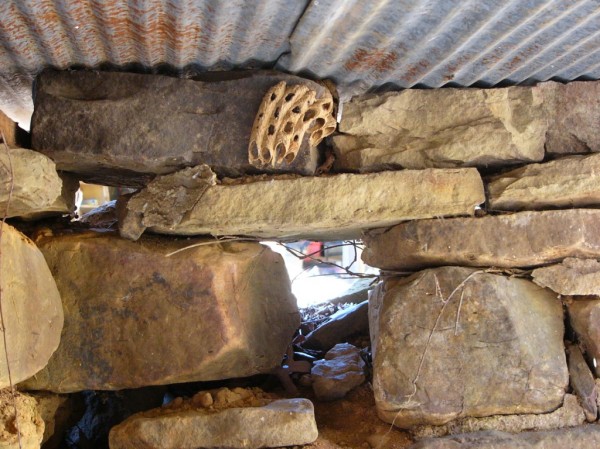
Here’s today’s inspiration photo:

And here’s a little story I call “Luchrupán.”

“All right, me boy-o Declan, what’re we going to do now?”

“Seamus, sure, and I don’t know.”

“Well, you did this, so you’d best be figuring something out.”

“Why is this my fault?”

“You’re the one who lived up to the stereotype and sat on the mushroom. Poor thing. Look at it, there, all broken.”

“‘Twasn’t I, Seamus. Some other wee folk it was.”

“Declan, you need to face facts. Your shroom-sitting days are done, lad.”

“What is it you’re trying to say, Seamus?”

“Well, Declan, you see, I’ve been meaning to tell ya, you’re not exactly wee folk anymore.”

 ————

For more 100-word flash fiction, go to Madison Woods’ blog and spend a fun few minutes reading short, short, short stories.

Reading and Writing

No, this isn’t a rant about the importance of the three R’s–reading, ‘riting, and ‘rithmetic–but a chat about the connection between writing and reading. They go hand in hand, and some of the most helpful advice any writer can hear is, “If you want to write, read.” I’ll add, “Read. A lot.”

Of course, you say, my shelves are lined with writing self-help books, and I’ve read them all.

I’m not knocking any of these books. In fact, one of my bookshelves groans with the weight of them. What I mean is, if you write fiction, read fiction. Let’s go a little deeper. If you want to write romance, read romance; if you want to write science fiction, read science fiction, etc.

In an on-line forum I belong to, someone recently posted, “I’ve decided I want to write science fiction!!! How do I go about that?” I responded that the aspiring writer should read Asimov, Pohl, Dick, Bester, LeGuin, Butler, Atwood, and so on. “No, no. I don’t want to read science fiction! I want to write it.”

I washed my hands of it.

You get your best writing instruction on technique, mechanics, and what people want to read by reading what you want to write. And I have to caveat that–read good, established writers of the fiction you want to write. I’ll suggest, for now, in the fledgling state of your writing in a genre, read traditionally published writers. There are exceptions to this, of course, but if all you read is unedited indie fiction, it will only reinforce negative writing habits. I’ve posted about this before, so I won’t repeat my indie-writers-must-proofread-and-get-an-editor riff.

Reading what you want to write can be instructive in another way. You can learn the valuable lesson that a particular genre is not for you. For example, I love mysteries of all kinds–from Agatha Christie to Janet Evanovich–but I’m not sure I could write one that wouldn’t be a re-hash of something a better mystery writer than I has already done. The same with sci-fi. That was what I wanted to write when I first set pen to notebook to write stories about Mr. Spock and Captain Kirk when I was a freshman in high school.

The sad truth was, and is, sci-fi is not my forte. Granted, my short story published in eFiction Magazine last year had a sci-fi background. “Without Form or Substance” is about a young professor who finds her dream job, only to discover it involves time travel. I found, because this was a character piece, I didn’t need to go into the scientific details of time travel, which I doubt I could pull off. I learned that from reading Octavia Butler and Ursula LeGuin, among others.

Of all the reading I’ve done in my life, it was the characters who stood out most for me or, rather, the way the particular writer developed and wrote a character. Most of what I read is character-driven, and as a result, my strength is in the characters I’ve developed. I wouldn’t have learned how to make them “real” people if I hadn’t read great, character-driven works by authors across many genres.

Balancing reading and writing can be a chore, though. If I want to devote the time I need to writing, I can’t read all day long, which I can do at the drop of a hat. I’ve shifted the brunt of my reading to the weekends, though I still read a little in the evenings or when I need a break from staring at the blank computer screen. When I’m reading something I enjoy, which engrosses me, it’s the hardest thing to set it aside. I’m currently reading And So It Goes: Kurt Vonnegut: A Life by Charles J. Shields. Not only is this a book about a writer, it’s a page-turner, and I regret every time I have to close the book and move on to something else I’m supposed to do.

Shields’ biography of Vonnegut is instructive on many levels. Not only do you see the mechanics of how to construct and research a biography, but you also get a glimpse into the life of a writer and how he wrote, what inspired him, and his struggle both to be published and to be accepted by other writers. I’ll give no more details than that because I want to review this book later.

I’ve found, for me, that when I hit a brick wall with something I’m writing, the best thing I can do is put it away. Then, I pick up a book and read.

What about you? What writers and what books have taught you how to write?

Settings

One of the things you learn in any fiction writing class is the importance of setting–a reader needs to be able to “see” where you’ve located your story. Sometimes writers can focus on the plot and the characters to the exclusion of setting. Sometimes setting can be just as important as memorable characters or a finely detailed plot.

When your work is a novel, unless it stays in one place for the length of it–like Agatha Christie’s Ten Little Indians or Murder on the Orient Express–you have to do some research if you’ve never been there. That’s a key component of the writing, because a reader might have been there and can spot the errors.

When John Updike got the idea for The Witches of Eastwick he had the perfect small town in mind–Wickford, RI. However, when he went to the town to research and people got wind of the plot–three witches in the 1970’s who take petty, and not so petty, revenge on neighbors–they threatened law suits if he used the name of the town. Updike let them think they won. The book’s title is The Witches of Eastwick, but if you read the description of Eastwick in the first few pages you recognize Wickford right away. And it was the perfect setting for this quirky novel about the devil coming to earth. (What would have been the difference had the Wickfordians not been such typical New England prigs? Maybe it would have been a tourist destination–it’s a quintessential New England town–instead of a town you drive through to get to the Newport beaches.)

I grew up in a rural area near a small town, so those are settings I’m comfortable with. I can tell from a story if someone has only seen a picture of a farm or gone to one. I spent a lot of my life in a large urban area and worked in the Nation’s Capital for the most part. I’ve spent a great deal of time in New York City, so I get the urban setting and am also comfortable setting a story in busy cities. I also like the juxtaposition of city and country–it’s something that’s never quite been overcome by urbanization.

I’ve done some world travel–a modest amount–to England, Scotland, and other places in Europe. I can insert any place I’ve visited in a story with ease. Some of my work is based in Eastern Europe, and that’s an issue. I’ve never been there, and, frankly, unless you’re a high-paid, commercial novelist, extensive travel to research your settings can be beyond the budget.

Atlases can give you maps and facts and figures–all good, of course–but Google Earth can put you there. Its “Street Views” options can put you in the city or town or countryside you want to write about. It’s still not as good as being there, but it can give you a starting point. The next point is finding someone familiar with the area to give you the personal touch or cultural memes for a setting. I had a friend who had traveled extensively with USAID, and he was always able to give me a good read-over for settings.

Some writers overcome the setting issues by creating completely fictional ones. Whether in fantasy, other genre, or literary fiction, that can eliminate any setting errors or hard feelings from the locals. For his collection of linked short stories, In an Uncharted Country, Clifford Garstang created Rugglesville, VA. For her first book of linked short stories, Thrown Out,  and an upcoming series of novels, Jennie Coughlin created Exeter, MA. Both constructs are real; you can “see” yourself in either place. They feel real. Even in fantasy or science fiction, if you create your own world, people still have to be able to “walk” through it. It’s not enough to say “we’re on a spaceship” or “we’re in a fairy land.” The writer has to give the setting depth.

Which do you prefer–setting your work in known locales, or do you create your own world?

Friday Flash Fiction–and Good News!

Writing can be the strangest occupation ever, especially when you’re dealing with a prompt–a word or a picture
–someone else provides. Since I’ve been participating in Madison Woods’ Friday Fictioneers’ 100-word flash fiction, I’ve been amazed how one picture can evoke so many different responses. One person always goes for the romantic, another fantasy, and I’m the quirky one. That’s a nice word for it.

Many times I get the Friday Flash Fiction inspiration picture on Wednesday and think, how will I ever come up with something for this? Then, it just comes to me. I’ve always been more of a seat-of-the-pants writer–whatever pops into my head goes down on paper (or on the screen). I’m not a methodical outliner or plotter. I get an idea and ride it to whatever conclusion comes to mind. That’s the way I write. I don’t recommend it for the faint-hearted because sometimes even I don’t know where the story’s going. Like today.

Here’s the inspiration photo:

And here’s my 100-word story:

The Mess

The inspector thought, How could this happen? There are procedures in place. I’ve talked myself blue in the face about the importance of following procedures. One little slip and look what you have. A mess. This isn’t going on my record. I’ll make sure of that.

The security guard thought, Man, why now? A completely dull day, then fifteen minutes away from shift end, this happens. Everybody else will be at the bar, watching the game and the babes, and where am I? Cleaning up this mess.

The boy thought, I really didn’t mean to do that. Please let me go.


———–

To read other Friday Fictioneers’ stories, take a look at Madison Woods’ blog.
———-

And some really great news. My short story, “Trophies,” about a marriage saved by a near suicide and an unexpected death, will appear in the February Romance Issue of eFiction Magazine. I got the acceptance yesterday, and I’ve been giddy ever since. A great start to the new year!
This story was the first one I wrote using a creativity prompt called Rory’s Story Cubes. Check them out.