AWP Day 1

Sorry, no Friday Flash Fiction today. 😦

The 2012 Association of Writers and Writing Programs (AWP) Conference in Chicago is exhausting, exciting, stimulating, tiring, fun, overwhelming, and a lot more descriptors than I can’t think of because I’m, well, pooped. But it’s a good kind of tired. Why? I’m surrounded by 10,000 fellow writers and a book fair bigger than any I’ve ever experienced. I may need to buy a second suitcase to get the books I’ve bought back home.

There are dozens of workshops each day, many of them so tempting you need to be three, or five, people to get to them all. Though many of the workshops are geared toward people who teach writing in high school or college, there are plenty for the rest of us.

On Thursday, I started a marathon day with “The Long and Short of It: Navigating the Transitions Between Writing Novels and Short Stories.” The panel was composed of writers who’d either gone from short stories to novels or vice versa. Moderated by Bruce Machart (The Wake of Forgiveness, Men in the Making), the panelists were Hannah Tinti (The Good ThiefAnimal Crackers; Tinti is also the editor of the online literary magazine One Story), Melanie Thon (Sweet Hearts, Girls in the Grass), Erin McGraw (The Seamstress of Hollywood Boulevard, The Good Life), and Kevin Wilson (The Family Fang, Tunneling to the Center of the Earth).

The key thing I took from this excellent seminar was that you can’t think of novels as expanded short stories nor short stories as shrunken novels. I’d always felt that way; I just hadn’t had it articulated so that I grasped it. The panelists were in agreement that they fret over short stories more “because every word is a potential for a mistake.” Writing novels are more “low gear,” and you have the luxury of knowing you can have “extra words” as a cushion. The panelists disagreed on switching between the two. One described himself as linear, having to finish a short story before he can move on to a novel. Another moves between novels and short stories in progress, using each to counter spots in the process where the work has become bogged down.

Another thing I could relate to was starting to write and not really knowing where the story is going–or the flip side, thinking it’s going one way, and it strikes out on its own. My recently published short story, “Trophies,” started out as a fun exercise describing, from a fish’s point of view, what it’s like to be caught. The story then went to a place I’d avoided writing about for many years and was much different from what I’d originally intended. It was nice to know I’m not odd that way.

Next came “Thinking with Your Own Apparatus: Fiction Writers and History.” Joyce Hinnefeld (Stranger Here Below) moderated Eugenia Kim (The Calligrapher’s Daughter), Dolen Perkins-Valdez (Wench), and Nalini Jones (What You Call Winter), all authors of non-contemporary historical fiction.

Kim and Jones write about their mothers’ cultures, Korean and Indian respectively, and they described the issues arising with not being immersed in that culture until they decided to write about it. Perkins-Valdez, who writes about African American slave women in the Civil War era, described an emotional trip to the Museum of the Confederacy for research. All emphasized the need for research and accuracy–because someone, somewhere will find the tiny error in language that slipped past. They also urged writers not to forget the characters amid all the historical detail–historical fiction “captures a feeling” and the reader has to like the history but must care for the characters.

After lunch, I attended “What I Wish I’d Known,” a panel of newly published authors who discussed the process each underwent to become published. One thing is for sure–none of those processes were the same. Rebecca Rasmussen (The Borrower) wished she’d known, since her book was about a librarian, that she should have run it past a librarian. The librarians who have read it, she said, have loved it, but they’ve pointed out all the things librarians don’t do.

Jeffrey Stepakoff (The Orchard) started out as a playwright and screenwriter, and he wished he’d known just how much he had to do to “sell” his book inside the publishing house, i.e., cultivating relationships with the cover designer, the marketer, etc. Nor was he prepared for readers having such direct access to him as a novelist, rather than a screenwriter.

“Don’t listen to conventional wisdom about what you should be writing” was what Elizabeth Stuckey-French wished she’d known. Her three books–Mermaids on the MoonThe First Paper Girl in Red Oak, Iowa, and The Revenge of the Radioactive Lady–afforded her different publishing experiences, but she came away from all three understanding that editors and agents do what they do because they love books. However, writers have to remember those editors and agents are also business people, not your BFFs.

Kim Wright (Love in Mid Air) was surprised at how much promotion she had to do for her first novel, though she enjoyed the process of being the primary advocate for her work. She cited her “writer’s paranoia”–she looked around her publisher and was convinced, as a new author, she wasn’t getting the same support as more established authors. Then, she found out the established authors thought she was getting more attention than they were! She especially wanted to dispel the myth that once you get that first book sold, you’re in like Flint. No, she said, “you keep having to go back through the door, as if it’s the first time.”

All the panelists agreed that hindsight on the publishing process for them was 20/20.

The final workshop of the day for me was “There Will Be Blood: Violence in Fiction.” Because I write espionage fiction, I wanted to make certain I was setting the right balance, i.e., that the violence was critical to the story and not gratuitous. The panelists were Alexi Zentner (Touch), Antonya Nelson (Bound), Benjamin Percy (The Wilding), and Alan Heathcock (Volt), and each emphasized that, often, the “invisible violence” is the most shocking or startling, that you don’t have to go for the blood and guts. Nelson said, “You can be more menaced by what you don’t see.” Holt said that violence in fiction is a lot like a sex scene in fiction: “It can be coy, clinical, or creepy.” Yet, they all emphasized that if the violence is “inauthentic,” it isn’t worth reading–or writing. As long as you don’t use violence as an end, it can be a critical part of the work. Another thing I’m getting right, apparently.

The day wasn’t over yet. That evening was the keynote address of the conference, and if I went to nothing else for the whole conference, I was going to this. Margaret Atwood, the premiere author of dystopian fiction, was the speaker. She began with a greeting to “all my Twitter followers,” which got a big round of applause. There were a lot of us in the audience. Atwood was funny, charming, and informative in a brief re-telling of her writing life. The 73-year old laughed at the recurrent rumor that she had died but emphasized that you have to write to maintain your relevance. In her case she’ll be relevant for a long time. It’s always great when someone you admire lives up to your expectations. As she left the stage to applause, she lifted the arm of the sign language interpreter and had her take a bow with her. A classy lady.

A long, but fulfilling first day. And tomorrow is another one.
Politics Wednesday – Feminism, NASCAR, and Danica Patrick

Maybe the brouhaha of the past few weeks over contraception, transvaginal ultrasounds, and aspirin between the knees has put my inner feminist on edge. And rightly so. The “battles” of access to contraception so you don’t have to opt for an abortion and women having say over what goes in their bodies, I thought had been fought and won a long time ago. Regardless, I’m ultra-sensitive to any hint of gender inequality lately.

Now, you might wonder why I’d be surprised at juvenile remarks aimed at newly minted NASCAR driver Danica Patrick by male NASCAR fans. It’s sadly true that my racing buds are notoriously gender-equality challenged.

Patrick, who raced a limited number of Nationwide Series races in 2011, often had trouble fitting in the No. 7 GoDaddy car fronted by JR Motorsports. Other male drivers were in the car when she wasn’t, and though most racers are not big guys, she had to deal with issues of being able to reach the controls. (As a woman pilot, I struggled with the fact that most small airplanes were built with tall, long-legged men in mind, so I can empathize.) There was an exchange on the radio last year with her complaining about being hot while moving slow on a caution (remember, most of her racing was in open, Indy-style cars) and her crew chief explaining to her how to use her hand at the small, side window to “cup” a breeze into the car.

“I can’t reach it,” she said.

The color commentators proceded to make comments about how she needed to learn how to take the heat,  their premise being the spoiled, Indy driver, famous for her allegedly prurient GoDaddy commercials, shouldn’t be in the car if she couldn’t hack it.

Now, Patrick is far from perfect or from being a top racer. In her Indy Car career, she had but one win, in a little-known race in Japan, but she did have a lot of top 10 and 15 finishes. More importantly, she never gave up. When she acted with the aggression male drivers ooze, she was a bitch. When her soft side came out–weeping over Dan Wheldon’s death last year–she was too weak-willed.

Patrick gets the attention because she’s in a sport that has admitted few women then excoriated those who did get in. She’s a different type of female racer–she can take it and dish it back. She has been known to climb from a wrecked car, toss her helmet aside, and corner the perpetrator of the wreck on pit road–just like, say, Kyle Busch. So, the men of NASCAR Nationwide and Sprint Cup need to understand she can give as good as she gets.

In 2012, Patrick will be a full-time Nationwide Series driver for JR Motorsports, owned by Dale Earnhardt, Jr., and his sister, Kelli, herself a former driver. Dale Sr. once remarked of his three children who raced–Kelli, Kerry, and Dale–she was probably the best. Kelli Earnhardt is a shrewd racing businesswoman, having made JR Motorsports one of the premiere owners in Nationwide in just a few years. She brooks no nonsense from her drivers, her brother included. Kelli has indicated that before Patrick became a part-time employee, she only knew her by reputation, the one perpetrated by mostly male racing sports journalists. When introduced to Patrick, Kelli found her a modest, caring, congenial person, willing to work hard and take instruction. In other words, a model race car driver. Patrick will also drive in a limited number of Cup races for Stewart-Haas Racing, including the Daytona 500.

Patrick isn’t going to take NASCAR by storm in one year. She will have failures–big, obvious ones–and she will have modest success, like any driver male or female who’s come before her. As someone who was a fan of the amazing Shirley Muldowney, I’m looking forward to rooting for Patrick this season. Hey, I’m a Dale, Jr., fan; I’m accustomed to disappointment.

So, I was excited to see Patrick had won the pole for the season-opening Drive4COPD 300 Nationwide Race this past Saturday at Daytona. “Winning the pole” means having the fastest time around the track in qualifying, so she was faster than everyone else–all men. Some of that is the car–perfectly tuned and balanced. A lot of it is the driver.

Then, came the juvenile remarks–“Heh, heh, that’s not her first ‘pole.'” Or the insidious–“Ah, the guys were told to slow down so she could get it. It’s a publicity stunt.” The prurience or sour grapes aside, she deserves a chance, like any other driver.

Though it has expanded its outreach to minorities and has some Hispanic and African-American drivers in its smaller, local racing series, NASCAR is still way too white and male where drivers are concerned. That will change. It is changing, far too slow for some of us, but change is incremental. And I’ve been a fan long enough to remember when drivers of a particular era said similar disparaging things about black drivers trying to break into NASCAR.

Patrick’s drafting partner nudged her a little too hard a few laps before the midway point of the Nationwide race, and after contacting the wall, she had to go to the garage for extensive repairs to the car. She re-entered the race 49 laps down with 30 laps to go and finished in 38th place–not last but not the win she coveted. Two days later, a massive wreck on lap two of the Daytona 500 again sent her to the garage, but she returned, 63 laps down, to finish 38th in a field of 43.

In Memoriam

I’m a wannabe journalist, but I was an aviation journalist. The toughest assignment I had was doing interviews and shooting photos in the July heat of Oshkosh, WI. I admired from afar the journalists who went into war zones or areas of conflict, when the war wasn’t “official,” and worked hard to show the rest of us what was really happening. I knew, intellectually, journalists sometimes got killed in areas of the world where governments don’t respect Freedom of the Press. Having someone you admire killed on behalf of truth brings it close to home.

In the 1990’s I had two, particular journalist heros–Veronica Guerin, who exposed crime at high levels of Irish society, and Anna Politkovskaya, who wrote first about the Russian debacle in Chechnya then corruption under Vladimir Putin. Both were murdered, Guerin by the mobsters in the Gilligan gang she exposed. No one was ever convicted of her murder, though one Gilligan gang member provided information about the murder in exchange for entering Ireland’s Witness Protection Program. The three men arrested–one with a vague Russian State Security link–in connection with Politkovskaya’s murder were acquitted.

Washington, DC’s Newseum maintains a Journalists Memorial, which contains the name of every reporter killed while pursuing the story anywhere in the world, as well as biographical information on each journalist. The list begins in 1837 with the death of Elijah Parish Lovejoy, who was killed by a pro-slavery mob as he protected the presses for his abolitionist newspaper, The Emancipator Extra.

In the past two weeks, unfortunately, three more journalists will join Lovejoy and 2,083 others on the Journalists Memorial: Anthony Shadid, Marie Colvin, and Remi Ochlik. All three died in Syria, working to show the rest of the world the truth of Bashir Assad’s brutal regime.

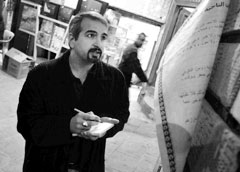
Shadid, originally from Lebanon, was known and respected for his balanced reporting about the Middle East. He was respected by all religious factions in the area because of his fairness, and the fact he knew what he wrote about. He died from an asthma attack, a death far from ignoble. He knowingly went into an area where he knew medical supplies were limited. Sometimes, the story is important enough.

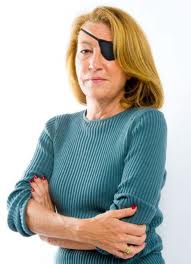
Colvin was said to be fearless, and she knew first hand the dangers of telling a story a repressive government didn’t want the world to know: David Blundy, who hired her for The Sunday Times, was killed reporting in El Salvador. Colvin’s reports from Homs, Syria, were raw and uncompromising. She died, along with Ochlik, at a makeshift press center, which might have been targeted on purpose by Syrian government forces. (Shrapnel cost Colvin her left eye while she reported on conflict in Sri Lanka.)

Ochlik, only 28, wanted to be an archeologist as a child in France, but when his grandfather gave him a camera, he took to it at once. He had a talent for capturing in his photos the emotions of a demonstration, and he was best known for covering the 2004 Presidential elections in Haiti. He returned to Haiti in 2010 to cover the cholera epidemic. Haiti, he said, was his war–“It was where I always dreamt to be, in the action.”

When you read or see journalists, pause for a moment and acknowledge that many of them go to places and into situations the rest of us would never have the guts to go. They show us truth.

Politics Wednesday – No Religious Test

The right wing nut jobs always fall back on the Constitution to bolster their specious arguments. Some, in fact, consider it handed down from God, though the word “god” appears nowhere in it. You’d think God would have cleared up any future debate about the alleged sanctity of the Constitution by dropping his name a time or two.

Unless you’re a constitutional lawyer (like President Obama) or a nerdy political scientist (like Rachel Maddow), you’ve probably never delved past the Constitution’s Preamble (“We the People…”) or the Bill of Rights. There is an obscure clause–obscure only the the RWNJ’s chose to ignore it–about something called “a religious test.” The Founding Fathers, believe it or not, were fed up with Anglicans’ having a chokehold on political jobs. Anglicanism was the State religion of England, after all. Virginia’s statute on religious freedom, written by Founding Father Thomas Jefferson, was to support Baptist congregations the state’s Anglican-laden government had thrown into jail for not being Anglican.

The Founders embraced that Jeffersonian principle of freedom of religion in the First Amendment, but they also wanted to make certain that no single religion would dominate the government they were creating. Tucked away in Article VI, paragraph 3, is this gem:

“The Senators and Representatives before mentioned, and the Members of the several State Legislatures, and all executive and judicial Officers, both of the United States and of the several States, shall be bound by Oath or Affirmation, to support this Constitution; but no religious test shall ever be required [emphasis added] as a qualification to any office or public trust under the United States.”

I’ve blogged about this before, when a poll showed one in five Republicans believed President Obama was a Muslim. Somehow, in their minds, that deemed him ineligible to be President because he wasn’t Christian. Certain evangelicals make the same argument today about Willard Romney’s Mormonism, but Article VI applies in his case as well. We had the argument fifty years ago when John F. Kennedy, a Catholic, ran for President. The argument then was his top allegiance was to the Pope, not to the Constitution.

The fact that the Founders put the religious test prohibition in the main body of the Constitution testifies to the importance in which they held. They truly envisioned an egalitarian society (for landed, white men, of course; unfortunately, they were men of their time) and wanted to make certain there was no Anglican takeover of the newly minted U.S. Government.

Because the economy is clawing its way from the abyss the Republicans put it in, and on President Obama’s watch, the RWNJ’s have to disinter the rotting corpse of The Question of the President’s Religion. Franklin Graham, an apple that fell miles from the tree, did a rant this week about being born Muslim. If your father is Muslim (the President’s father was), when you’re born, you’re a Muslim. Franklin, who, as a missionary evangelical, preaches the only way you can be saved is by converting to Christianity, apparently feels that’s not the case when the son of a Muslim accepts Christ as his personal savior, gets married in a Christian ceremony, and talks about his Christian faith far more often than I like. Franklin must think “Muslim blood” is really powerful, if his God’s omnipotence can’t overcome it.

And I say, if that’s true, if a parent’s religion makes you that religion at birth, so what? Much like Romney’s Mormonism, a person’s religion–or lack thereof–cannot disqualify them from office.

Oh my Holy Lord, you say, that means a Devil Worshiper could become President!

Technically, yes, but Devil Worshipers don’t have much interest in politics, I would think. Selling their souls and pleasing their Dark Lord are probably more important to them.

Oh my Holy Lord, you again say, that means a, gasp, atheist could become President!

Indeed. You’ve already had a couple of those. They’re called Deists, the “religion” of many of the Founding Fathers, several of whom became President. Trust me, if you’d called Jefferson a Christian, he would have brought out his copy of “Jefferson’s Bible” and showed you where he’d removed all reference to myth. It was a very slim volume.

We have to stop judging people by their religion or their lack of religion. I’ve known some theists who were the vilest human beings you’d ever not want to meet, and I’ve known atheists who were the kindest, most “christian” people I’ve ever known. And vice versa, of course. We need to assess our Presidents and Presidential candidates on their merits, their position on issues, and not how or whom they worship.

Franklin Graham needs to come to grips with the fact he’ll never be his father, who is a humble and forgiving man who acknowledged the times he was wrong, like about segregation. Re-bury that question of the President’s religion and focus on jobs, the economy, the environment, equal rights–you know, things “We the People” are concerned about.

—————

For a good understanding of just what four, key Founding Fathers believed or didn’t, read Founding Faith: How Our Founding Fathers Forged a Radical New Approach to Religious Liberty by Steven Waldman. It will change your mind, if it’s open, about several Founders and clear the RWNJ mythology away from history.

Having a Life vs. Writing

Yesterday, here in the Shenandoah Valley, we had one of those picturesque snowfalls. The view of the snow-covered mountains is incredible. I pause every time I walk past the door to the porch just to take it in. Snow also means work–cleaning the driveway, for example. I almost didn’t do that. I have a 4WD vehicle, after all. I could just back through the snow and go. One glance at the cleared, pristine driveways of my neighbors changed that. So, at the time I’d normally be sitting down to blog, I was outside shoveling.

That kind of repetitive work frees up my brain to think, so while I shoveled, I pondered a story that got rejected with a vague request for a rewrite and thought over comments from the most recent meeting of my critique group. Before I realized it, half the driveway was clear, and most of the sidewalk. (My house is on a corner lot, so I have twice the sidewalk of everyone else.) The bonus was I also had a clear idea about the rewrite and the critique group comments.

Time to sit down and write.

Well, the rest of the week, however, is full of outside obligations–two meetings about a web site I may become responsible for (not writing related), babysitting, a special reading sponsored by my writing group, SWAG, and my book club, the book for which I haven’t finished. I’m looking at the schedule, and I’m not seeing the time to write, edit, or revise, unless, of course, I want to burn the midnight oil, and that’s looking more likely. Good thing I don’t have a real job anymore.

All this is to say, no matter how much you plan to set aside the time to write–and I established a pretty strict schedule for the new year–real life is always there, commitments you’ve made and must honor. Well, the grandkids aren’t a commitment; they’re just plain fun and always adjust my perspective on life. Time spent with them is well-spent and something I look forward to with excitement.

It’s important to my writing, though, to have a life. On the Myers-Briggs scale, I’m a very high E, meaning I get energized by external stimuli. If I spend too much time at the computer in the world I’ve created, I become too insular and nothing works–writing, editing, or revising. It’s a balance, almost as precarious as what I had to do when I worked full-time and struggled to be the best at my job at the same time as I struggled to be a good friend and spouse. You’re always feeling guilty about one or the other.

Establishing that writing work schedule helped me strike the balance between real life and writing life, but it’s done nothing for feeling guilty when I’m writing or when I’m having a life.

How about you? How do you strike the balance between real life obligations and your writing life?

Politics Wednesday – Reactionaries

Reactionary – adjective; of, pertaining to, marked by, or favoring reaction, especially extreme conservatism or rightism in politics; opposing political or social change.

Reactionary – noun; a reactionary person.

That’s the modern definition of a reactionary. One of my political science profs was more succinct: progressive = forward thinking; reactionary = backwards thinking.

That “backwards thinking” seems to be part and parcel of being a Republican lately. The Repugs seem to have a disturbing nostalgia for the way things used to be–women not working outside the home, women not being able to use birth control, women not being paid the same as men, women not needing legislation to assure police take their claims of domestic violence seriously, etc.

I hope you’ve picked up the common theme here. In case you haven’t, it’s women. Republican men–and some Republican women–in state legislatures across the country have proposed or enacted some of the most backwards laws regarding women’s health and a woman’s right to decide what she does with her body.

In response to a story about the high number of rapes and sexual assaults of women in the military, Liz Trotta, an “analyst” on Fox News, said that women who go into the military should just expect to be raped. I don’t know which is worse–the “lie back and take it” attitude or the assumption that men are just born rapists. My mother said the same thing when I went to work at the FAA, a then male-dominated workplace, but my mother was certifiable.

Rick Santorum, in addition to opposing any form of birth control (So, why is your wife not pregnant again, Rick?), recently said that women working outside the home is harmful to families. He also said that having women in front line positions in the military would mean male soldiers would be distracted by their desire to protect them. If a woman is raped and becomes pregnant, he says, she should just accept God’s gift of life. The more outrageous things he says about women and their place in society, the higher he surges in Republican polls.

In my home state of Virginia, the state legislature just passed a law requiring a woman who wants an abortion in the first trimester to get an ultrasound, even if her doctor says she doesn’t need it. The theory seems to be if the woman sees a fully formed baby she’ll change her mind. The reality is the fetus isn’t fully formed in the first trimester–it’s so small the ultrasound has to be done trans-vaginally. That means the ultrasound device is inserted in a woman’s vagina to obtain the scan of a fetus that is 2.5 inches long and weighs less than an ounce. In case you didn’t get it, I’ll repeat: Inserted. In. A. Woman’s. Vagina. What is it we call penetration of a woman’s vagina against her will?

This longing for a world where women were less than equal partners, where constant childbirth brought early death, where domestic violence was considered a “family matter,” puzzles me. Why would anyone want to go back to a social, political, and economic era that was thinly disguised patriarchy? Do we have to fight that battle all over again?

If it’s because the male ego can’t handle women as equals, get over it. This is life now–women get to choose whether to work or stay at home; whether to have a child or use birth control; whether to serve their country or not; whether to have a rapist’s baby or not. Get over yourselves and your obsession about controlling women’s bodies.

We won’t go back to that. We won’t be like Callista Gingrich who knows the only reason she’s at Newt’s side is to stand there and look pretty as she smiles at him and nods. That’s her choice; it won’t be the choice of women capable of standing on their own two feet.

Sorry, Repug guys, we’re not taking off our shoes, bunking in the kitchen, cleaning the house in pearls, or staying pregnant our entire married lives. We will move forward. You can be the reactionaries.

Second Childhood

When I was a sophomore in high school I joined the school newspaper. My English teacher, who was the faculty advisor, thought it would be a good fit for me. The newspaper was a popular extracurricular activity, and I waited a good part of the school year for my first feature assignment. Writing captions for the sports photos wasn’t exactly thrilling, though it taught me about being succinct. (Coincidentally, when I first joined FAA Aviation News magazine as a reporter, my first assignment was writing captions for the photos and illustrations for each article.)

Then, six weeks or so before school ended, we had a new student transfer in. Her father was a State Department employee, and she and her family had been living in Greece in April 1967 when a Greek military junta staged a coup. Apparently, she and her family had had a bit of an adventure escaping. So, the editor said, “You’ve been bugging me to give you a story. Go interview her.”

Yes, the stuff movies are made of–lowly caption writer makes good with her first feature article. Well, it kinda happened that way.

Truth was, I had no clue what I was doing. I was the only person on the paper who hadn’t taken the Journalism elective because you had to be a junior or senior to take it. I did, however, read two newspapers at home every day–The Washington Post and the now defunct Evening Star. The high school library had issues of the New York Times and the Boston Globe, usually only a few days old, and I’d spend my free time reading them. I just decided to imitate how reporters wrote stories in those papers.

I sat down with my classmate, as nervous as I was, I think, and somehow we managed to do an interview. I spent hours and hours writing and rewriting, tweaking and revising–and remember this was in the day of the manual typewriter. My family got tired of hearing the clack, clack, click of the keys.

Yet, I didn’t think I’d done enough to be worthy of a front-page story. I figured the editor–a senior who tried to emulate editors he’d seen in movies, except he couldn’t smoke or drink in school–would cut it to a few inches and hide it on an inside page somewhere. With a feigned nonchalance, I’d decided I wasn’t even going to look at the paper when it came out, but that didn’t last very long.

There it was, on the front page, above the fold–newspaper folks will get that–with my byline and everything. To illustrate it, the editor had taken the student’s picture and somehow gotten a wire photo of a menacing Greek Army tank. Well, I thought, I’ll get some shred of respect in this place at last. I should have remembered this was high school. The subject of my interview had people clustering around her and her locker between classes, and I was still the girl who belonged to the science club and had her nose in a book.

I continued to write features for the high school and, later, college newspapers. I tried to get summer jobs at our local newspaper, The Fauquier Democrat, to no avail–I wasn’t majoring in journalism. Though the Democrat editor deemed my clippings “good,” he didn’t even have time or money for a caption writer. So much for that dream.

After an abortive attempt at teaching and a stint as a copy editor for the safety publications of a consortium of aviation insurance companies, I became a reporter on a government aviation safety magazine. I worked on and off for the magazine for almost half my time as a government employee. Once I “passed” the caption writing test, I interviewed some of the most interesting people in aviation at the time, as well as individuals of general historical interest, like Chuck Yeager and Jackie Cochran. I went on to become the magazine’s editor, only doing the occasional feature and a regular opinion piece.

The dream of working on a local newspaper I had long since put behind me. I retired as soon as I was able to concentrate on writing fiction. For two years that’s been my focus–classes to hone my craft, attending writer conferences, submitting stories to magazines while I worked on my novel. Then, out of the blue came an opportunity to write occasional features for the Staunton News Leader, my new hometown’s paper.

When my first article came out yesterday in the Living@Home section of the paper, I was as nervous as I had been decades before, and there it was. First page of the section. Above the fold. With a byline. I was a kid again, remembering the first time I knew what I wanted to be when I grew up.

TGIFriday Fictioneers!

When I was a working slob, as opposed to a retired, writing slob, my colleagues and I awaited each Friday with the anticipation of a lifer being being pardoned and put back into society. Friday meant two days of not working. Well, there was always house cleaning and laundry doing, but we were slaves to the desk no more. For two whole days!

Friday now holds a different anticipation for me. On Wednesday, Madison Woods posts the inspiration photo for the Friday Fictioneers’ 100-word flash fiction challenge. That means we have a whole day to ponder the photo and come up with something brilliant to say in 100 words. Friday means publishing the snippet, then checking back throughout the day to not only read others’ stories but to bask in the glowing comments other Friday Fictioneers have left about yours.

Friday is still a day to look forward to, but for entirely different and much more fun reasons.

Here’s today’s inspiration photo:

And here’s a little story I call “Luchrupán.”

“All right, me boy-o Declan, what’re we going to do now?”

“Seamus, sure, and I don’t know.”

“Well, you did this, so you’d best be figuring something out.”

“Why is this my fault?”

“You’re the one who lived up to the stereotype and sat on the mushroom. Poor thing. Look at it, there, all broken.”

“‘Twasn’t I, Seamus. Some other wee folk it was.”

“Declan, you need to face facts. Your shroom-sitting days are done, lad.”

“What is it you’re trying to say, Seamus?”

“Well, Declan, you see, I’ve been meaning to tell ya, you’re not exactly wee folk anymore.”

 ————

For more 100-word flash fiction, go to Madison Woods’ blog and spend a fun few minutes reading short, short, short stories.

Politics Wednesday

I find it amusing that when it comes to prayer in school, right-wingers have no problem in taking down the wall between church and state. Almost to a man the current candidates for the Republican nomination have decried the fact that children can’t pray in school. Trust me, kids pray in school, especially on exam day; rather, an authority figure isn’t leading them in a specific prayer from a specific religion.

Yet, when it comes to an Affordable Care Act requirement that employers pay for birth control, suddenly the same right-wing talking heads flaunt the First Amendment and Separation of Church and State when it comes to Catholic employers. They want the separation there, but not when it comes to school prayer or teaching creationism in science class.

Trust me, this sudden righteous indignation about the Catholic Church’s having to go against it’s principles, is pandering. It isn’t sincere. That, and the Repugs needed an issue when the current economic news was so positive for President Obama. They have to make it look like the President is forcing the Catholic Church to his will.

Really?

Here’s the deal, the Church is whining loudly about this because it turns the light of truth away from the big problem with the Catholic Church hierarchy–that it either turned its collective head away or, by inaction, condoned the systematic buggering of children by priests who, lured by the false promise that god will take all afflictions away, had free rein to traumatize children then stand on the altar and decry homosexuality, pre-marital sex, and birth control in hypocritical homilies.

I’m a former Catholic–not lapsed, not non-practicing, not fallen. I left the Church because I realized it never really welcomed me. I was a woman who advocated a woman’s right to control her own body. No matter what I had accomplished in my career or personal life, no priest could acknowledge that I lived and worked by my own rules, not his, not god’s, and that no job I had was more important than being a wife and a mother. And what would he, alleged unmarried celibate, know about it?

The Catholic Church needs to drop preaching against birth control. Given the small size of Catholic families today, Catholics are using birth control, and it’s not the rhythm method, which had conditional approval from the Church. More than half the Catholics polled about the Affordable Care Act’s provision for employers’ providing coverage for birth control concurred with it. The sanctimonious talking heads, however, see an opportunity to attack the President couched in the cloak of religion.

The Catholic Church took too long to “sorta” allow the use of condoms to prevent AIDS, confining their use to sex workers but not their clients when they go home to have sex with a spouse. It’s nuts, and if the Church wants to be a viable force in the world, it needs to accept current reality, not a medieval one.

And there are other religions–notably many evangelical or fundamentalist protestant ones–who don’t believe in birth control. Why aren’t the Repugs displaying indignation on their behalf? Well, Catholics are a large group in the U.S., and some Repug strategist somewhere has cynically pointed out that maybe, if they can turn that Catholic bloc against the President, they might get the flip-flopper elected.

If anything, Catholics are realists, which is why they use birth control and why they ignore the Church’s dictum that sex is only for the purpose of reproduction–otherwise why haven’t Newt and Callista had a bunch of kids? By her own testimony in Newt’s divorce proceedings, they began an affair in 1993, when Callista was 27, and she had no children. They married when she was 34, and they’ve had no children. The Gingrich’s have obviously used birth control–or they’re following Church dicta and not having sex. Yeah, right. I’ll concede that perhaps either she or Newt has a physical problem that prevents conception, but, again, sex without the intent of reproduction is a “sin.”

Are you beginning to see why I left the Catholic Church?

So, whenever Newt–or any other Catholic–decries President Obama for interfering with the Church’s teachings, can he or they do so without being a hypocrite?

I doubt it.

Reading and Writing

No, this isn’t a rant about the importance of the three R’s–reading, ‘riting, and ‘rithmetic–but a chat about the connection between writing and reading. They go hand in hand, and some of the most helpful advice any writer can hear is, “If you want to write, read.” I’ll add, “Read. A lot.”

Of course, you say, my shelves are lined with writing self-help books, and I’ve read them all.

I’m not knocking any of these books. In fact, one of my bookshelves groans with the weight of them. What I mean is, if you write fiction, read fiction. Let’s go a little deeper. If you want to write romance, read romance; if you want to write science fiction, read science fiction, etc.

In an on-line forum I belong to, someone recently posted, “I’ve decided I want to write science fiction!!! How do I go about that?” I responded that the aspiring writer should read Asimov, Pohl, Dick, Bester, LeGuin, Butler, Atwood, and so on. “No, no. I don’t want to read science fiction! I want to write it.”

I washed my hands of it.

You get your best writing instruction on technique, mechanics, and what people want to read by reading what you want to write. And I have to caveat that–read good, established writers of the fiction you want to write. I’ll suggest, for now, in the fledgling state of your writing in a genre, read traditionally published writers. There are exceptions to this, of course, but if all you read is unedited indie fiction, it will only reinforce negative writing habits. I’ve posted about this before, so I won’t repeat my indie-writers-must-proofread-and-get-an-editor riff.

Reading what you want to write can be instructive in another way. You can learn the valuable lesson that a particular genre is not for you. For example, I love mysteries of all kinds–from Agatha Christie to Janet Evanovich–but I’m not sure I could write one that wouldn’t be a re-hash of something a better mystery writer than I has already done. The same with sci-fi. That was what I wanted to write when I first set pen to notebook to write stories about Mr. Spock and Captain Kirk when I was a freshman in high school.

The sad truth was, and is, sci-fi is not my forte. Granted, my short story published in eFiction Magazine last year had a sci-fi background. “Without Form or Substance” is about a young professor who finds her dream job, only to discover it involves time travel. I found, because this was a character piece, I didn’t need to go into the scientific details of time travel, which I doubt I could pull off. I learned that from reading Octavia Butler and Ursula LeGuin, among others.

Of all the reading I’ve done in my life, it was the characters who stood out most for me or, rather, the way the particular writer developed and wrote a character. Most of what I read is character-driven, and as a result, my strength is in the characters I’ve developed. I wouldn’t have learned how to make them “real” people if I hadn’t read great, character-driven works by authors across many genres.

Balancing reading and writing can be a chore, though. If I want to devote the time I need to writing, I can’t read all day long, which I can do at the drop of a hat. I’ve shifted the brunt of my reading to the weekends, though I still read a little in the evenings or when I need a break from staring at the blank computer screen. When I’m reading something I enjoy, which engrosses me, it’s the hardest thing to set it aside. I’m currently reading And So It Goes: Kurt Vonnegut: A Life by Charles J. Shields. Not only is this a book about a writer, it’s a page-turner, and I regret every time I have to close the book and move on to something else I’m supposed to do.

Shields’ biography of Vonnegut is instructive on many levels. Not only do you see the mechanics of how to construct and research a biography, but you also get a glimpse into the life of a writer and how he wrote, what inspired him, and his struggle both to be published and to be accepted by other writers. I’ll give no more details than that because I want to review this book later.

I’ve found, for me, that when I hit a brick wall with something I’m writing, the best thing I can do is put it away. Then, I pick up a book and read.

What about you? What writers and what books have taught you how to write?