Ladders to Friday Flash Fiction

Friday Fictioneers LogoBy some sort of odd coincidence, both Friday flash fiction exercises I participate in (Friday Fictioneers and Flash! Friday) have ladders in their photo prompts today. One is commonplace; the other unusual, and both different enough that one story won’t fit both. Not that I’d do that anyway. Both brought lots of interesting thoughts to mind.

Friday Fictioneers’ photo prompt brought back to mind a favorite episode of mine from the classic Twilight Zone series. I’ve mentioned before that watching that series and seeing the stories penned by not only Rod Serling but people who became some of my favorite writers (Bradbury, Matheson, and many more) made me want to write.

Serling was an amazingly erudite man who had such a grasp of human frailty, and he reflected that in his tales of the other worldly and macabre. Almost single-handedly he made the term “speculative fiction” credible in a literary environment that dismissed such writing as pulp. (That, unfortunately, still happens to a certain extent.) He wrote or adapted to a screenplay ninety-nine of the original 156 episodes, including the one I’m paying homage to in today’s Friday Fictioneers offering, “Reincarnation.”

If you’ve never watched the original offerings of Twilight Zone, give them a try. Ignore the black-and-white presentation and the sometimes cheesy special effects and pay attention to the stories, the words, which are masterful.

As usual, if you don’t see the link on the title above, scroll to the top of the page, click on the Friday Fictioneers tab, then select the story from the drop-down menu. If you want to read the story for Flash! Friday, which features a ladder as well, click here or click on the Flash! Friday tab above and select the last story (Escalera del Jacobo) on the list.

Say What?

One of the key skills in writing fiction is mastering dialogue, i.e., making dialogue true to life. Sometimes what sounds perfectly normal in our heads becomes stilted when we read it aloud. Reading your work aloud is an excellent tool for spotting missing words, dangling participles, misplaced modifiers, bad dialogue, etc. (I’d advise against doing that in public places, however, unless you don’t mind explaining yourself to the cop someone will inevitably call.)

You’d think dialogue would be easy given the fact that, well, you engage in it on a daily basis, but, for me, there’s nothing more story-killing than reading dialogue that doesn’t sound “right.”

I recently started reading a series by Kevin Hearne featuring a 2,000-year-old Druid (the last one in existence) who can carry on a conversation with his Irish wolfhound. Oh dear, I thought, this could be bad, really bad. I love it when I’m fooled. Hearne’s conversations between the Druid Atticus and his wolfhound Oberon are engaging enough to advance the story and comical at the right moments. You realize if you could converse with your dog, these are exactly the conversations you would have. It’s great stuff–not for the literary types, of course, but great entertainment.

One way to improve your dialogue is to take a real exchange you’ve had and rewrite it from different viewpoints, e.g., switch places in the conversation or respond the way you would have liked to at the time. And if you want your dialogue to be as true to life as possible, keep a notebook with you and jot down real conversations you overhear at the supermarket, a coffee shop, or a bar. Bars are the best because liquor loosens the inhibitions, and people say things they wouldn’t normally say. Supermarkets are good because most of what you hear is one side of a telephone conversation, and those are intriguing enough, as a writer, you can’t help but supply the other side in your head.

A few months ago I was in the coffee shop that was my regular hangout when I lived in Northern Virginia, and the three young baristas in goth mode were discussing zombie apocalypses in an everyday, commonplace way. I mean, when talking about where zombies come from, you can’t make stuff this good up:

“Voodoo, you know,” one says. “Like, in Africa.”

“Oh, yeah, Africa,” the other agrees.

The only male among them gave a short bark of laughter, a snort really, and said, “Africa. That’s stupid. Zombies come from China.”

“How do you know?” the first one asked.

“Duh, I’m in a bookstore. I read World War Z.

“Dude, that was, like, fiction.”

“Uh, no. It’s an ‘oral history of the zombie war.’ Go look if you don’t believe me.”

“Yeah, right. It’s in the science fiction section.”

“No, it’s not. On my break, I, like, move them all to the history section.”

See, I never would have come up with that on my own. If the story I wrote around that conversation ever gets published, I’ll go back and thank them, provided, of course, they have been changed into zombies. In that case, I’ll thank them before decapitating them.

Listening in on other people’s conversations can be touchy. You have to be surreptitious about it because if someone suspects you’re listening in on their “private” conversation in a public place, they can get upset. (Not that it’s happened to me, of course.) That’s why I prefer capturing snippets of real conversations on a computer or my iPhone. People expect you to have a computer anywhere there’s free wi-fi, so they don’t look twice, and almost everybody texts nowadays.

A caveat here: Don’t be tempted to use the “Record” attributes of your computer or smart phone. Yes, you can capture real dialogue word for word, but if you’re in a state that doesn’t allow taping of third-party conversations without the participants’ permission, you could be in trouble. I mean, who would know, unless you got caught, but there’s the whole ethics thing for me.

If you doubt this can be useful, I’d say just give it a try. Sometimes you might overhear something that clarifies a character for you or puts words in a character’s mouth. Other times you can get a fully developed character dumped in your lap. People are bloody interesting, and their real conversations can take on more meaning rendered in fiction. And how lucky are we that people feel as if public venues are their personal confessionals?

Seeing as how I’ve had very interesting conversations of my own in public places, I’m waiting for the day when I read a story or novel and go, “Hey, that’s me! I said that!”

What about you? Is dialogue easy or difficult for you? Where do you go to hear those jewels of dialogue?

Prepping for Tinker Mountain

I haven’t been this excited to sleep in a dorm room since the summer of 1970 when I left to attend Madison College in Harrisonburg, VA (aka James Madison University). And it’s funny how the prep list is similar: bring your own bed linens, towels, soap, shampoo, etc., and something to carry them to and from the bathroom; bring a desk lamp; and bring money for the laundry. It’s nice to see some things have immutability.

A few things are different: There’s free wi-fi in the dorms, and the course of study lasts just one week.

What I’m talking about is Tinker Mountain Writers Workshop at Hollins University in Roanoke, VA. From Monday through Friday next week, I’ll be in craft workshops and one, intense five-day workshop on stretching my fiction, taught by Pinckney Benedict, author of an amazing book entitled Miracle Boy and Other StoriesThere are eight other writers in the class as students, and we’ll each critique the others’ work.

We had to submit 5,000 to 7,000 words of a current work, which both the instructor and the other students will review. The instructor’s comments are one-on-one, so the humiliation factor is low. There is an evening where the students sign-up to do a reading. I’m not so certain about that. It was a lot to push my comfort level by reading at SWAG Writers, but I managed to do that and look forward to it. However, I know most of the people in SWAG, and this will be baring your soul in front of strangers.

Yes, I can be a drama queen.

Still, I’m so looking forward to this adventure that my writer friends are likely sick and tired of hearing about it. I have attended small, one-day or half-day workshops and attended several writing conferences in the past two years, but this is my first intensive workshop where my writing is up on the sacrificial altar. Daunting, yes, but I know I’m coming out of it a better writer.

So, my notebook is ready; the bed linens and towels are ready; the desk lamp is ready; I’m ready. But I have to wait until Sunday. 😦

I’ll try to blog from there periodically, but I think my schedule will be full. And my readers will probably tire of hearing about it, too. Hey, I’m as excited as a college freshman. Indulge me!

Story Cubes Challenge – Week 7

Several people have asked me why I write espionage fiction, and the truthful answer is, it just happened. When I was in high school I was a big fan of the old television show, “The Man From U.N.C.L.E.,” which got me intrigued about the world of espionage (and good-looking Russian men). But I was a bigger fan of John le Carre who wrote spy stories that were authentic. No car chases, no missile-equipped Astin Martins, no unlikely gadgets. Oh, there are women, but they aren’t Bond girls.

My favorite le Carre novel is The Spy Who Came in From the Cold, and it has thriller aspects, but it’s a deep psychological study of espionage tradecraft and the people who employ it. I find this type of espionage writing very engaging, and when I figured out I wasn’t going to write cute little mysteries involving a smart, young, female FAA inspector, I decided I wanted my stories to be an homage of sorts to le Carre.

In the 1990’s I discovered the spy novels of Alan Furst. Furst writes the “historical spy novel,” meaning he immerses himself in the time and place where he sets his novels, and his spies are the unlikeliest of people, which is most always the case. Being an historian myself, I love his series of novels set before and during World War II. They’re a “behind the scenes” look at the tangled web espionage can be. Again, his novels, like le Carre’s, are the antithesis of the cinematic James Bond. (Ian Fleming’s first several Bond novels were straightforward, gritty stories of just how dirty and amoral espionage can be, but crass commercialism, alas, is crass commercialism.)

Now, don’t get me wrong. I’m not comparing myself to either le Carre or Furst. I have a healthy ego, yes, but I also know I could only be imitative of two masters of true to life spy novels. I try, but how well I’ve done remains to be seen.

That little bit of background in place, here is the picture for this week’s Story Cube Challenge:

This is what I saw, left to right: break/broken; pushing/up against a wall; hand in hand/holding hands; hanging/hanging on; flower; reaching/out of reach; reading; book; lab accident (It looks like a lab flask to me!).

Again, I have to say that when Jennie Coughlin rolls these dice, the result is chance but also challenging. This week was probably the most challenging yet. Once again, there were repeats, so coming up with something that didn’t echo a previous story took me some time.

This week’s story, “A Beautiful Day,” involves some of that old-fashioned tradecraft, but I threw in an explosion for you action lovers. It also shows that espionage and spies are necessarily deceptive, sometimes even to the people they trust.

If you’re interested in giving Story Cubes Challenge a try, use the picture above, write a story, then go to Jennie Coughlin’s blog and post a link to your story. Did you see the same things I did?

Friday Fictioneers Fun

It’s funny how you can look at an inspiration photo the first time and get nuttin’. Then sometimes, you look at the photo, and the story pops, fully formed, into your head. And it’s the most absurd (in a funny way) idea you’ve had in a while. Then, it turns into a piece of great fun which reminds you that Friday Fictioneers is just that, fun, but the kind of fun where you can hone your craft. So, it’s serious fun.

And, I got to Google “moth reproduction”–certainly a first for me.

Over the years, I’ve been told my dialogue is great–realistic, rings true, expositive. So, with Friday Fictioneers, I’ve tended to write narratives because dialogue is something I don’t have to focus on every day. Last week’s story, “Sure, and It’s Hard Being Wee Folk,” was dialogue plus dialogue tags and got more than seventy reads and 100 percent positive comments. Yay, me!

I also like to play around, now and then, with dialogue with no tags–so you have no indication of the speakers’ genders (or species) or their relationship, but I thought twice about doing an all-dialogue story two weeks in a row. However, the subjects of this week’s story wouldn’t be silenced. I hope you enjoy “Moth Love,” or as a friend called it “Moth Porn”–just imagine cheesy music playing in the background. (If you don’t see the link to click in the title, “Moth Love,” hover your cursor over the Friday Fictioneers tab above, and select it from the drop-down menu.)

To participate in Friday Fictioneers, go to Madison Woods’ blog and leave a link to your story in the comments to hers, then read some of the offerings. Pretty soon you’ll see time has passed while you’re having fun, and you’ll probably be late for work. Oh well.

Please feel free to leave constructive feedback on mine.

Virginia Festival of the Book – Day Three

Day Three of the Virginia Festival of the Book started early for me. I got up at the crack of dawn to make certain I had time to do my Friday Fictioneers’ 100-word flash fiction post. That done, it was time for breakfast then to hit the road.

The first panel, “Fiction: Crossing Boundaries,” was about family drama, loss, and love. Both Joe Lunievicz and Elzabeth Nunez had been on other panels I attended yesterday. Lunievicz hadn’t read from his work (Open Wounds) the day before, but today he did. The passage he read confirmed that my decision to buy it was a good one. Nunez read from a different book today, Boundaries, and revealed a subtext about the publishing industry in New York, so I purchased it.

Even though I’m not an alumna of the University of Virginia MFA, I attended an alumni reading next. Of particular interest to me was Chad Harbach, who read from his debut novel, The Art of Fielding. I have gone back and forth on buying it because it seemed for every good critique of it, there were three negative. The passage he read convinced me to make the leap to buy it for my Kindle. Brittany Perham read from her book of poetry, but, frankly, she’s a “modern” poet; I thought she was incomprehensible. Eleanor Henderson read from her novel, Ten Thousand Saints, and it was an intriguing glimpse into a family in Vermont that was both fascinating and disturbing. It’s a possibility for the Kindle.

Though the panel “Readers and Social Media” was supposed to be about how to communicate with readers using social media, it was really more about author use of social media in general. However, panelists Susan Gregg Gilmore (Looking for Salvation at the Dairy Queen), Rebecca Hamilton (co-founder of Friday Reads), Bethanne Patrick (An Uncommon History of Common Sense and co-founder of Friday Reads), and Elizabeth McCullough (Book Balloon) clued us in on not just social media resources but additional web sites for networking and marketing.

If “The Art of Short Fiction” sounds familiar, it was the same as a panel on Wednesday but with different authors: Erika Dreifus (Quiet Americans), Jeremy Griffin (Last Resort for Desperate People), Cathryn Hankla (Fortune Teller Miracle Fish), and Tamra Wilson (Dining with Robert Redford). They each read from their works, but the same moderator from Wednesday asked the same questions she had on Wednesday. Griffin’s and Wilson’s works stood out, and I’m thinking about purchasing their short story collections.

I ended the day with “Fiction: Reconstructions” with three novelists who dealt with war and its aftermath. Casey Clabough (Confederado) and Taylor Polites (The Rebel Wife) dealt with post-Civil War reconstruction. Clabough’s novel was based on an ancestor of his who was a member of Mosby’s Rangers. After the Civil War, many of Mosby’s men and many more southerners fled to Brazil, including Clabough’s relative. The novel takes on a little-known aspect of southern history, and I purchased it to add to my “books about/involving Mosby” collection, though this is the first novel. Unfortunately, Polites lost me when he referred to slaves as “devoted servants.” Starnes’ novel deals with a World War II vet who isn’t a particularly nice person, but he has redeeming moments. His novel is also notable for having portions of it in the point of view of a dog. The selection he read was earthy and guttural, and I’m considering purchasing it.

Tomorrow is publishing day–with a little dip into writing thrillers.

Virginia Festival of the Book – Day Two

My VFTB day started at noon with “Fiction: Finding Your Way,” featuring authors Ernessa Carter, Sarah Pekkanen, Lolette Kuby, and Jason Wright. The theme was novels where the protagonists run away from something.

Wright’s book The Wedding Letters is a sequel to The Wednesday Letters, and both books are about written letters that change people’s lives. The connection to “running away” wasn’t clear, other than the characters move away from life as they thought it was based on the information in the letters. The concept of the first book intrigued me, and I bought that instead.

Pekkanen featured two books, The Opposite of Me and Skipping a Beat. These two books deal with aspects of women’s relationships, siblings and marriage respectively. A book about women’s friendships will be out soon, and another on motherhood will follow. Her summary of Skipping a Beat, where the husband in a relationship becomes a different person as a result of a heart attack, struck a little too close to home (the becoming a different person part) and made me emotional to the point where I felt I couldn’t buy the book. The premise is intriguing, but I’m not ready for it yet.

In the age of eHarmony and Match.com it’s difficult to believe that people still write personal ads, but Kuby explores them in a book within a book. The protagonist in her novel, Writing Personals, is writing a non-fiction book about personal ads and drafts one to post herself. It sounded fascinating, but I’m waiting for the Kindle version.

Carter, who grew up in a mostly black neighborhood of St. Louis, longed for a girl, with skin darker than hers, to join her sixth grade class so her lighter-skinned classmates would no longer tease her. As an adult, Carter took that longed-for girl and made her the protagonist of 32 Candles. The portion she read was lyrical and very visual, and I bought the book because I was curious about Carter’s “Molly Ringwald ending.” The book came with a hot pink tote bag emblazoned with the book’s cover–great swag!

The next panel was “Fiction: Running from the Truth.” So, two panels with a “running from” theme. The authors on this panel were Amy Franklin-Willis, Elizabeth Nunez, David Huddle, and Robert Olmstead. I think among them they’ve won just about every literary award except the Man Booker and Pulitzer Prizes. At least, it seemed that way–a very distinguished panel. Each read from their works.

Franklin-Willis was excited to be in Charlottesville because it was a setting in her book The Lost Saints of Tennessee, but she’s never been to the city. She researched extensively on the Internet and enjoyed driving through the city and seeing the places she highlighted. Her story of a promising young man who fails everyone’s expectations for him sounded interesting, and I’ll get this for my Kindle.

Nunez, an immigrant from Trinidad, likes featuring the theme of immigration in her works. She read from her book, Boundaries, about a woman dealing with her mother’s breast cancer and wondering about the fact she doesn’t know how to love her mother. Another topic a bit too close to home, but she talked about another book, Bruised Hibiscus, which sounded intriguing, and I’ll check for that on Kindle as well.

Huddle, a dour-looking professor at Hollins University, has, in fact, a wry sense of humor. He read the opening of his book, Nothing Can Make Me Do This, which is about how a thirteen year old girl learns her beloved grandfather has a stash of porn movies. The books sounds interesting, but what he said about knowing the ending before you start a book resonated–“It’s what keeps me writing, wondering what I’ll learn from each book.”

Olmstead is an ex-pat New Englander in love with West Virginia. That love came through in his reading from The Coldest Night, about a young man from West Virginia who has, as we say in the South, no advantages. He’s in love with the daughter of a prominent man, who shows his disapproval of the relationship in a somewhat expected way. Another possibility for the Kindle.

The final panel, for me, of the day was “Fiction: Conspiracies and Obsessions.” The four panelists–Alma Katsu, Amelia Gray, Virginia Moran, and Joe Lunievicz–were some of the most fascinating writers I’ve heard speak in a long time. Each of their books uses an alternate world and varying degrees of madness.

Katsu, a former intelligence analyst, now writes books she admits are almost unclassifiable, with elements of magic, paranormal, and romance. She began writing to get her mind off an illness and “to see if I could write a novel.” The result was The Taker, which is book one of a three-book deal, a deal good enough she could quit her government job to write full time. Lucky her. I had to retire to do that. I bought The Taker for my Kindle.

Lunievicz, a fencer, started his novel on the basis of a vision–two men dueling with swords on the rooftop of the Chelsea Hotel in New York City. Fencing is a thread through the book, but it is historical fiction surrounding the Errol Flynn movie, Captain Blood. I loved that movie as a child, and that was the deciding factor for my buying the book.

Gray’s book Threats is about a man whose wife dies and who then slowly goes mad. It also began from a vision–of a man at the top of a staircase and a woman covered in blood at the bottom. The premise was intriguing, but Gray didn’t read anything from it and rather treated the panel as an opportunity for stand-up comedy. To be fair, she wasn’t feeling well, but she didn’t convince me to buy her book.

Moran, an English teacher through and through, wrote a short story about a mathematics professor in a cabin in the Adirondacks trapped by a massive snow storm. She decided it didn’t work as a short story, but after studying Virginia Woolf’s Mrs. Dalloway, she began to reconsider her story. Woolf took a short story and turned it into that novel, and Moran was inspired to do the same. That unworkable short story became The Algebra of Snow, a novel, which was also her PhD dissertation. I liked the concept of taking a short story you’re disappointed in and expanding it, so I purchased this book as well.

Tomorrow, my day starts at 1000 and goes well into the evening. I can’t wait.

Friday Fictioneers – I’m Back!

As much fun and as much as I learned at the American Writers and Writing Program Conference last week, I really missed doing my 100-word story for Friday Fictioneers. Moreover I couldn’t wait until Wednesday rolled around to see the picture, and, wow, the story popped right into my head. I almost couldn’t wait until Friday.

For a review of a chapbook I purchased at the conference click on: Book Review – Betty Superman.

Here’s the inspiration photo from Madison Woods:

The following story is dedicated to friends who served in Vietnam. By the way, in the story I use a term which some may find offensive, but it is a historically accurate term used by U.S. soldiers in that war.

Reluctant Sojourn

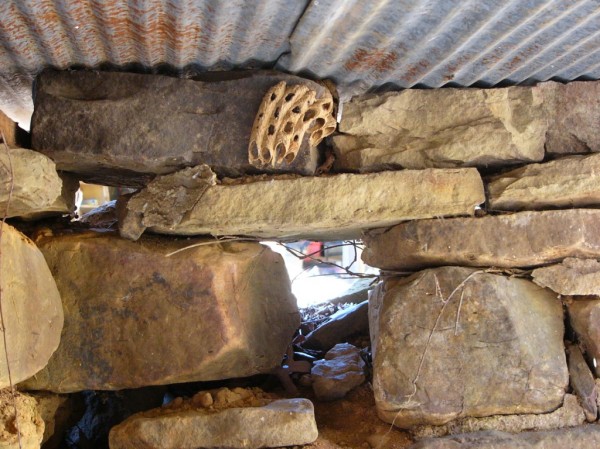
I never liked working on the plumbing in an older house. The cellars and crawlspaces were damp; their fetid smell stirred memories best kept hidden. I needed this job, so I went in.

The day was cold. Fear made me sweat, and the corrugated ceiling put me back in the box where Charlie kept me during my reluctant sojourn in the Hanoi Hilton, the old one, not the Hanoi Hilton Opera there now, a real hotel.

I kept my eyes away from the air hole. If I looked, Charlie would be looking back, like he does in my dreams.

———

For more 100-word stories by Friday Fictioneers, go to Madison Woods’ blog and have a read.

Friday Flash Fiction Returns!

I took a little break from Friday Flash Fiction last week to do a Veterans Day tribute, though I had some great ideas for the inspiration photo of a budding corpse flower.

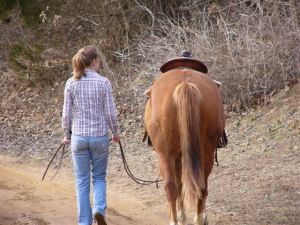
Today’s inspiration photo is a subject close to my own heart. The picture evoked great memories of idling summer Saturdays away on horseback or riding the farm with my Dad. So, here’s the photo:

And here’s the 100-word (exactly!) story, which I call, “Constancy.”
Her loyalty had no end. It would transcend death. Always at my side, ready when I’m ready, rests when I need it, offers kindness. We complete each other. We are extensions of each other by choice not demand.
We can have companionable silence, or we can communicate without words, with a touch, a nudge. And, oh, how we’ve traveled. Uncountable miles, over stream and hedge. Fences do not stop us. We love the open field best. Speed, and the desire for it, is the gift we share.
Still, I can’t help wonder how she manages on just two, spindly legs.
———
Questions, comments? To read more 100-word stories, go to Madison Woods blog,http://madisonwoods.wordpress.com/flash-fiction/the-lonely-path/

Friday Fiction Rolls Around Again!

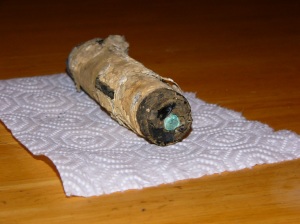
We had an interesting picture for today’s Friday Fictioneers, but it took all day for some inspiration to hit me. Here’s the picture, of a long-buried stick of dynamite one hopes is inert.
I call this 100-word fiction, “Homeland Security”
“9-1-1. State your emergency.”
“My husband brought a stick of dynamite into the house.”
“Dynamite? Are you certain?”
“Well, that’s what he says it is. Can you send the bomb squad here or something? I mean, it’s old and corroded. Harmless, right?”
“Ma’am, what is your husband doing with dynamite?”
“What? It’s not his dynamite. He found it. If you just send the bomb squad to get it…”
“Just a moment, ma’am.”
“Hello? Hello?”
The front door crashed open. A bright flash and loud bang. Men with guns. Shouting and confusion.
“Hands up!”
Her husband was so in trouble.
—–
Questions, comments? To read more 100-word fiction, go to http://madisonwoods.wordpress.com/flash-fiction/dynamite/